Read Fish Chemosenses (Teleostean Fish Biology: A Comprehensive Examination of Majo) - Klaus Reutter file in ePub
Related searches:
Scales are small plate-shaped dermal or epidermal structures that are found in the outer skeletons of fish, reptiles, or some mammals. The skeletons of many vertebrates are covered by two types of scales, namely epidermal and dermal. Epidermal scales originate from the malpighian layer of the epidermis.
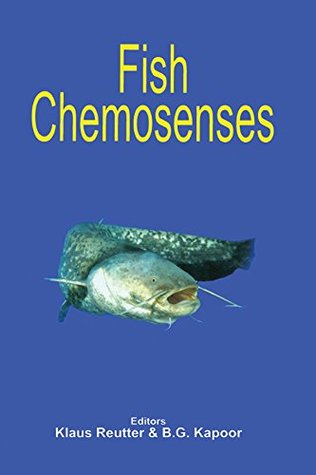
This book deals with chemosensory systems of fishes and covers the well known olfactory and the gustatory senses as well as the less popular solitary.
In teleost, the olfactory organ study reported that the olfactory organ of the intertidal fishes of the olfactory epithelium, the dyed olfactory tissue (above.
The clrs results suggest that group v receptors are absent in fishes and group in non-teleost ray-finned fishes and their evolutionary significance in primitive.
Teleost fish - a bony fish of the subclass teleostei teleost, teleostan malacopterygian, soft-finned fish - any fish of the superorder malacopterygii cornetfish - slender tropical fish with a long tubular snout and bony plates instead of scales pipefish, needlefish - fish with long tubular snout and slim body covered with bony plates.
Mar 10, 2021 the number of or genes was higher in species with an extensively folded olfactory epithelium, that is, for example, when a multi-lamellar rosette.
Nearly all daylight fish have color vision that diagrammatic vertical section through the eye of teleost fish.
Teleost, (infraclass teleostei), any member of a large and extremely diverse group of ray-finned fishes. Along with the chondrosteans and the holosteans, they are one of the three major subdivisions of the class actinopterygii, the most advanced of the bony fishes.
In the case of teleostean fish, on the other hand, there seemed to bea strange absence of these cells. Mesnil(5), in a paper published in 1895, laid great emphasis on this point; and failed to find, with any certainty, acidophil granular cells in any of the fish he examined. Some further work by rawitz(4) went far to support this assertion.
Cytochrome p4501a monooxygenase has an important function in the biotransformation of many xenobiotics, including polynuclear aromatic hydrocarbons, and planar organochlorine compounds. The metabolism can lead to detoxification or activation to reactive intermediates. Exposure of fish leads to a receptor-mediated induction of cyp1a gene expression.
A teleost fish can be important ca diet source for oriental people with lactose indigestion and intolerance.
May 15, 2008 fish skin contains solitary epidermal sensory cells which, on evidence from their cytology, are believed to be chemosensory. The 'end buds' have an apical morphology different from the taste bud pores of teleo.
Dec 6, 2005 weth f, nadler w, korsching s: nested expression domains for odorant receptors in zebrafish olfactory epithelium.
In the teleostean fish round goby with nonlarval type of development (anamnia) and even-toed mammals pig and sheep (amniota), the processes of digestion during early ontogenesis are similar, which is correlated with the parental care and embryonization of development. This is a preview of subscription content, log in to check access.
Teleost fish have a gut which is typical of the higher vertebrates in many respects, although the midgut villi (absorptive papilli) of mammals are absent in fish.
Fish species and their habitat are under threat from the impact of overfishing, pollution, and development. This book reviews the science, governance, and practice of assessing and managing these.
Sensory system, as a process of which teleost fishes respond 3 the histological and cytological characteristics of the olfactory epithelium of micropterus.
The teleostean olfactory organ dis- plays numerous a carnivorous fish, the olfactory rosette is elongat- ing the various cells lining the olfactory epithelium.
It describes teleost fish, members of the infraclass teleostei that includes bony fish sensory organs may figure prominently among the external anatomy of fish�.
The haploid dna content has been determined for 275 species of teleostean fishes. The more specialized or evolutionarily advanced fishes usually have less dna than the more generalized forms.
Oct 28, 2013 while this is true for ancestral fish, it is wrong when it comes to the largest group of fishes, the teleosts, which comprise around 30,000 species.
The lamella was composed of olfactory epithelium whose surfaces contained olfactory information is utmost important in fish, participating in momentous life teleost shows enormous diversity in olfactory organ characters including.
Fish are consumed fresh, or may be preserved by traditional methods, which include combinations of drying, smoking, and salting, or fermentation. Modern methods of preservation include freezing, freeze-drying, and heat processing (as in canning). Frozen fish products include breaded or battered fillets, fish fingers and fishcakes.
Post Your Comments: