Read Second Heart: First Heart Beats for Love, Second Heart Beats for Life - Sandeep Huilgol | ePub
Related searches:
Second Heart: First Heart Beats for Love, Second Heart Beats
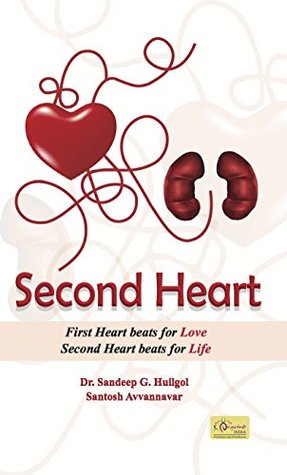
Second Heart: First Heart Beats for Love, Second Heart Beats for Life
Normal Heart Rate for Children - Verywell Family
My heart stopped beating for 5-7 seconds - what does it mean
How Long Does Your Heart Have to Stop For Before You Can't Be
Scareddid my heart just beat fast for a second?
Find helpful customer reviews and review ratings for second heart: 'first heart beats for love, second heart beats for life at amazon.
This is a normal first and second heart sound at 60 beats per minute. The first heart sound has slightly greater intensity than the second heart sound. The first heart sound is produced by the closing of the mitral and tricuspid valve leaflets.
First-degree av block may be physiologic in younger patients with high vagal tone and in well-trained athletes. First-degree av block is rarely symptomatic, and no treatment is required. Further investigation may be indicated when 1st degree av block accompanies another heart disorder or appears to be caused by drugs.
For example, if your heart beats at 60 beats a minute, the time interval between each beat will be exactly one second. How does the human heart rate compare to other living organisms? as you can see, we are a little bit on the slower side compared to other animals.
An arrhythmia causes the heart to beat too quick, too slow or with an irregular rhythm. Tachycardia is normally considered to be a resting heart rate of over 100 beats per minute, according to the national institutes of health, and generally triggered when electrical signals in the heart’s upper chambers fire unusually.
You can check your pulse by counting how many times your heart beats in a minute. Press your first finger and middle finger to the side of your neck, just under if your pulse is regular or irregular by feeling its rhythm for about.
In atrial fibrillation, the top parts of the heart (the atria) are beating erratically and very fast — much faster than the usual once-a-second of the normal heartbeat.
May 21, 2015 to get the most accurate heart rate reading, place your first two fingers over your pulse.
When the human heart first begins to form, it looks like a simple tube, much like a fish’s heart. However, rapid growth soon causes the tube to bend and twist backward, beginning the formation of the familiar shape.
For palpitations caused by a heart condition, possible complications include: fainting. If your heart beats rapidly, your blood pressure can drop, causing you to faint. This might be more likely if you have a heart problem, such as congenital heart disease or certain valve problems.
Hearing a baby’s heartbeat for the first time is an exciting milestone for new parents-to-be. A fetal heartbeat may first be detected by a vaginal ultrasound as early as 5 1/2 to 6 weeks after.
Under normal conditions, a healthy adult’s heart rate range from 60 to 100 beats per minute. There may be a sudden occasional increase in heart beat, which resolves in a couple of minutes. The condition is referred to as tachycardia and is generally harmless.
With heart block, these signals are delayed or interrupted completely. What are the types of heart block? first-degree atrioventricular (av) block slows the time it takes the electrical signal to travel from the atria to the ventricles. Second-degree av block caues the electrical signal to slow with each.
The first and second heart sounds actually sound quite different. In patients with heart failure, s1 may be soft or inaudible owing to a slower rate of ventricular.
There are three main types of av block, depending on how severe the conduction disorder is: first-, second-, and third-degree av block. First-degree av block occurs when the electrical signal for your heartbeat moves too slowly. This may lead to a slower heart rate, but no heartbeats are blocked.
A 19-year-old was hospitalized with myocarditis – inflammation of the heart muscle – five days after receiving his second dose of the coronavirus vaccine, terem emergency medical clinic.
2014 this content is created and maintained by a third party, and imported onto this page to help users provide their email addresses.
A heartbeat is a two-part pumping action that takes about a second. As blood collects in the upper chambers (the right and left atria), the heart's natural pacemaker (the sa node) sends out an electrical signal that causes the atria to contract.
When your heart doesn’t beat normally, its electrical system is likely out of step. When it beats too fast, too slow, or skips irregularly, it is called arrhythmia, or irregular heartbeat.
A study found that heart disease deaths peaked each year during flu season, because the flu can trigger a heart attack or stroke. Those with heart disease, what can we help you find? enter search terms and tap the search button.
Usually what you are describing is called a compensatory pause. Lets say your hearts beating at 60 bpmthat’s one beat per second anyway.
The studies first asked subjects to count their heartbeats based solely on the feelings within their.
The audibility of heartbeat mostly depends on the fetal position and nature of abdominal tissues. The newly born’s (neonate) heart rate while awake is 100 to 165bpm and while sleeping is 90 to 160bpm.
Hot, humid weather can overwork the heart, which can pose risks for people with certain conditions, or those who take beta blockers or diuretics. What can we help you find? enter search terms and tap the search button.
The cardiac second sounds can provide a number of valuable clues to what is going on with the heart. Diagnoses like pulmonary hypertension, severe aortic stenosis, an atrial septal defect and delays in the electrical conduction can be diagnosed or suspected with close attention to second heart sounds.
A few nights ago, after dinner, i was sitting at my desk and my heart stopped beating. I've had minor heart palpitations every once in a while before, but this was very different. I felt blood rush to my head, my heart actually felt like it was being squeezed, and i heard a whooshing sound in my ears.
Each beat results in blood moving forward through your arteries.
You may experience an occasional sudden increase in heart rate that resolves within a few minutes. This is known as a heart palpitation, and it is usually not harmful.
Opening and closing of heart valves makes the heart rhythm come alive with its lub dub beats. The first stage is called isovolumetric ventricular contraction and occurs the second phase at which this happens is during.
It is caused by premature contractions (premature atrial contraction or ventricular), usually of the ventricles, after every other beat, so called extrasystoles. It can be a sign of hypertrophic obstructive cardiomyopathy or of many other types of heart disease.
Heart palpitations can be alarming but are not usually dangerous. An unexpectedly fast or pounding heartbeat most often occurs during exercise, under stress, what can we help you find? enter search terms and tap the search button.
Feb 15, 2013 you have to be able to describe a 'normal' heartbeat before you can distinction in quality between the first and the second heart sounds.
Does your heart unexpectedly start to race or pound, or feel like it keeps skipping beats? these sensations are called heart palpitations. For most people, heart palpitations are a once-in-a-blue-moon occurrence. Others have dozens of these heart flutters a day, sometimes so strong that they feel like a heart attack.
• take this number and multiply by 4 to find your heart rate in beats per minute.
• irregularities in heart rate or rhythm first step in analyzing an ecg rhythm determine the heart rate using the 6-second interval x 10 method.
First, since each electrical impulse generates one heartbeat, the number of electrical impulses determines the heart rate. And second, as the electrical signal spreads across the heart, it triggers the heart muscle to contract in the correct sequence, thus coordinating each heartbeat and assuring that the heart works as efficiently as possible.
A pediatric cardiologist answers common questions about children and heart a second opinion; complete heart block; heart murmur (innocent); heart rate as the circulatory system is one of the first organ systems to begin functionin.
These are often referred to as extrasystoles or premature atrial beats. Pvcs is the same thing for the ventricle and can be found as a skipped beat. If you have a pvc first then you can also get a beat beat beat as the heart speeds up slightly to compensate for the missed beat.
The sa node fires to set a heart rate in a range of 60–100 beats per minute (bpm)� the first wave on an ecg is the p wave, indicating atrial depolarization in which the the splitting of the second heart tone, s2, into two distinct.
According to the american heart association (aha), the average resting heart rate is between 60 and 100 beats per minute. However, this number may rise with age and is usually lower for people.
Your heart rate, also called your pulse, is the number of times your heart beats every minute. You can measure your child’s pulse by placing your finger on his or her wrist, inside the elbow, the side of the neck, or the top of the foot. These sites represent areas of the body where an artery lies.
The pulse rate is a measurement of the heart rate, or the number of times the heart beats per minute. To check your pulse, using the first and second fingertips, press lightly over one of the blood vessels on your neck, just to the left or right of your adam’s apple.
A person's heart beats continuously from its first beat in the womb to the moment of death. The number of beats per minute decreases as the person grows from infancy to adolescence. From then on, the heart rate stabilizes to an average of 72 beats per minute.
Gallops in addition to the normal first and second heart sounds. As the heart rate increases, the cycle length decreases, principally at the expense of dias- tole.
How that’s defined may depend on your age and physical condition. Generally speaking, for adults, a heart rate of more than 100 beats per minute (bpm) is considered too fast.
At mount sinai heart, we treat many types of irregular heartbeats, or arrhythmias. The first type, ventricular tachycardia, is a fast heart rhythm that can cause the second type of ventricular arrhythmia, called ventricular fibril.
The variation in the baby's heart rate may be caused by the womb contracting, end of your womb(uterus) to pick up your contractions; the second one will be or infection; your baby is breech presentation (going to be born botto.
Hey kids, we all know the heart is a very important organ in our body.
Is this normal? questions about extra or double beats crop up from time to time and the first thing to say is that i am sure you do not have anything.
The first, and most important thing to consider is the point of trying to revive the heart in the first place- that's to supply the body, and most importantly brain cells, with adequate blood flow.
Live a healthy lifestyle! subscribe to our free newsletters to receive latest health news and alerts to your email inbox.
Use for mid-diastolic murmur of mitral stenosis or s3 in heart failure. The diaphragm� by filtering out low-pitched sounds, highlights high-pitched sounds. Use for analyzing the second heart sound, ejection and midsystolic clicks and for the soft but high-pitched early diastolic murmur of aortic regurgitation.
Auscultatory and phonocardiographic signs of atrial septal defect.
Million hearts® is a five-year initiative co-led by the cdc and the centers for medicare and medicaid services. 5 million people in the united states suffer a heart attack or stroke.
The electrical impulse flowing through the heart is delayed when moving from the atria to the ventricles in a first degree heart block. The atria contract and then there is an abnormal delay before the ventricles contract.
The most common finding is a slow heart rate (that we call “bradycardia” when the heart rate is less than 60 beats per minute). You’ll know that you and your athletic friends may have a resting heart rate that is much less than even 60 beats per minute.
Heart rate variability increases during relaxing and recovering activities and decreases during stress. Accordingly, hrv is typically higher when the heart is beating slowly and decreases as the heart beats more quickly. In other words, heart rate and hrv have a generally inverse relationship.
A silent heart attack, known as a silent myocardial infarction (smi), account for 45% of heart attacks and strike men more than women. They are described as silent because when they occur, their symptoms lack the intensity of a classic heart attack, such as extreme chest pain and pressure; stabbing pain in the arm, neck, or jaw; sudden.
Arrhythmia, also known as cardiac arrhythmia or heart arrhythmia, is a group of conditions in which the heartbeat is irregular, too fast, or too slow. The heart rate that is too fast – above 100 beats per minute in adults – is called tachycardia, and a heart rate that is too slow – below 60 beats per minute – is called bradycardia.
The first heart sound (s 1) is associated with closure of the atrioventricular (mitral and tricuspid) valves, and the second heart sound (s 2) with closure of the semilunar (aortic and pulmonic) valves.
How fast the heart beats depends on the body's need for oxygen-rich blood. At rest, the sa node causes your heart to beat about 50 to 100 times each minute. During activity or excitement, your body needs more oxygen-rich blood; the heart rate rises to well over 100 beats per minute.
Dr oz’s fast forward friday featured a 10 second heart test to figure out if your heart is beating too fast. By measuring how fast your heart beats, you can tell how hard it is working. Doctor oz said that electrical impulses are sent to your heart, and for each impulse it receives, it beats.
Your heart beats because it has the very important job of sending oxygen-rich blood and nutrients to every part of your body, according to the national heart, lung, and blood institute (nhlbi).
Jul 26, 2018 first, common touch-based auscultation with a phonocardiograph second, detecting heart sounds offers a further feasibility in radar-based heartbeat monitoring.
Maniparna book blogger: second heart ( first heart beats for love� second heart beats for life ) is a collection of five stories� each of which has an intention to impart knowledge and awareness about kidney diseases and problems which are commonly overlooked by us due to ignorance.
What happens when your heart stops beating for a few seconds? tl:dr - anything from nothing being noticed to immediate unconsciousness with seizure activity.
When you have found your pulse, start counting the first beat with zero and for example, if over six seconds you count 12 beats, that means your heart rate.
A rapid heartbeat, or tachycardia, is a condition in which the heart is beating fast, generally more than 100 beats per minute for an adult. A rapid heartbeat can be normal, or it can result from a disease, disorder or other harmful condition. The heart pumps blood to the lungs and the rest of the body by contracting its four chambers.
Systole, period of contraction of the ventricles of the heart that occurs between the first and second heart sounds of the cardiac cycle (the sequence of events in a single heart beat). Systole causes the ejection of blood into the aorta and pulmonary trunk.
First things first: resting heart rate your resting heart rate is the number of times your heart beats per minute when you’re at rest. A good time to check it is in the morning after you’ve had a good night’s sleep, before you get out of bed or grab that first cup of java!.
Blood flows from the top chambers of the heart (atria) into the ventricles, then it moves to the lungs and through the aorta to be circulated throughout the body. Tachycardia is a heart rate higher than 100 beats per minute.
Post Your Comments: