Read Online Understanding Parkinson's Disease (Family Doctor Series) - John Pearce | PDF
Related searches:
This knowledge is important and it challenges the understanding of parkinson's disease that has been prevalent until now, says per borghammer.
A diagnosis of parkinson's disease will probably precipitate extensive research and reading to learn about the illness. Although the disease involves standard symptoms, everyone experiences something unique in terms of progression and treat.
Parkinson's disease is a progressive nervous system disorder that affects movement. Symptoms start gradually, sometimes starting with a barely noticeable tremor in just one hand. Tremors are common, but the disorder also commonly causes stiffness or slowing of movement.
Parkinson's disease is diagnosed in more than 50,000 americans each year. Find parkinson's disease information here including symptoms and treatments -- from medication to surgery.
Jan 31, 2018 parkinson's disease: overview of major events; parkinson's disease in the elderly/a; causes of parkinson's disease in seniors; old age onset.
The development in therapeutics and a better understanding of the targets results in upsurge of many promising therapies for parkinson's disease. Parkinson's disease is defined by neuronal degeneration and neuroinflammation and it is reported that the presence of the neurofibrillary aggregates such as lewy bodies is considered as the marker.
Plastic laminated chart 20 x 26, durable with metal eyelets at top corners for hanging or portable-stand display.
Understanding parkinson’s disease offers patients and their caregivers the kind of cutting-edge information that will allow them to successfully confront this debilitating disease on a number of fronts. Naheed ali provides patients with a hopeful perspective as well as practical ways of confronting and living with the disease.
With an alzheimer's disease diagnosis, the questions will probably follow as you struggle to come to terms with this disease. Understanding alzheimer treatment options will be crucial so you can make decisions about care.
Understanding parkinson’s disease (pd) parkinson’s disease (pd) is a degenerative disorder that primarily impairs a patient’s motor skills, speech and facial expressions. Primary symptoms of pd include muscle rigidity, tremor, slow movement (bradykinesia), poor balance and difficulty walking.
Attention deficit hyperactivity disorder, or adhd, is easily misunderstood, particularly by those who witness it in others but don't take the time to find out for themselves. The symptoms of adhd vary from person to person, however, inatten.
Understanding parkinson's there is a lot to know about parkinson's disease. Learn about symptoms, how it is diagnosed and what treatment options are available.
(bpt) - living with parkinson’s disease (pd) can be hard for the nearly 1 million americans with the disease[i] and may present unexpected daily challenges.
Jan 14, 2020 parkinson's disease is the second most common neurodegenerative disorder and is associated with an array of motor and non-motor.
Movement is normally controlled by dopamine, a chemical that carries signals between the nerves in the brain. When cells that normally produce dopamine die, the symptoms of parkinson’s appear. Most common symptoms tremor slowness and stiffness impaired balance rigidity of the muscles other symptoms fatigue soft speech problems with handwriting.
Understanding parkinson's disease - parkinson's disease (pd) is a progressive neurological disorder.
These are really exciting times in the field of parkinson's disease research. Although the etiology of sporadic disease still remains a mystery, many of the proteins associated with hereditary disease (5-10% of all disease) have now been identified.
The lack of understanding of how different each patient with parkinson’s is and the numerous possible causes for parkinson’s has led to minimal therapeutic options to help with this condition. Parkinson’s disease is now commonly viewed as an umbrella term describing a large group of disorders with different causes and presentations.
Parkinson's disease is a condition of the central nervous system that progressively affects movement.
Understanding parkinson's disease - parkinson’s disease (pd) is a progressive neurological disorder.
I am incredibly pleased to announce the recent launch of the accelerating medicines partnership (amp) parkinson’s disease (pd) knowledge portal. Nih has joined forces with public, private, and non-profit partners to provide a platform that will lower barriers to identifying and validating biomarkers that could be used in pd diagnosis, prognosis, mapping disease progression,.
Understanding parkinson’s disease dementia medically reviewed by nancy hammond, md as many as 20 percent of patients with parkinson's disease develop parkinson’s dementia, which includes loss.
Parkinson's disease (pd) is a common, debilitating, neurodegenerative disorder characterized by neuronal loss within the basal ganglia and insufficient levels of the neurotransmitter dopamine. Symptoms include resting tremor, rigidity, bradykinesia (slowness of voluntary movement), and postural dist.
The american parkinson disease association (apda) is the largest grassroots network dedicated to fighting parkinson’s disease (pd) and works tirelessly to help the approximately one million with pd in the united states live life to the fullest in the face of this chronic, neurological disorder.
Parkinson disease is a condition that affects control over your movements. It’s caused by a lack of dopamine, a chemical that helps the nerve cells in your brain communicate with each other.
Scientists have found the first solid evidence that a malfunctioning immune system contributes to parkinson's disease, a neurodegenerative movement disorder.
Parkinson's uk is the operating name of the parkinson's disease society of the united kingdom.
Jan 13, 2020 the hallmark symptoms of parkinson's disease are motor symptoms that include shaking hands and slowness of movement, but specialists still.
Making an accurate diagnosis of parkinson’s disease can be complicated. Doctors must carefully weigh symptoms, family history and other factors to come to a conclusion. The standard diagnosis of parkinson’s disease right now is clinical, explain experts at the johns hopkins parkinson’s disease and movement disorders center�.
It can cause the muscles to tighten and become rigid this makes it hard to walk and do other daily activities. People with parkinson’s disease also have tremors and may develop cognitive problems, including memory loss and dementia.
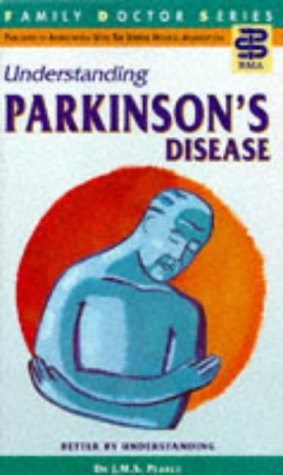
A neurologist whose father suffers from parkinson's provides a layreader-friendly explanation of the disease, its history, development, treatment and modern advances that may ultimately lead to a cure.
Understanding parkinson’s at the parkinson association of the carolinas (pac), we try to help patients, families and caregivers understand parkinson’s disease. This section of our website is a resource where you can learn more about:.
Not everyone will experience all the symptoms of parkinson’s, and if they do, they won’t necessarily experience them in quite the same order or at the same intensity. There are typical patterns of progression in parkinson’s disease that are defined in stages.
Mar 6, 2019 parkinson's disease is a type of movement disorder that happens when nerve cells in the brain don't produce enough of a brain chemical.
Twitter; facebook; linkedin; pinterest; e-mail; print; parkinson’s disease is a disease of the brain in which the neurons that produce dopamine in the brain are destroyed. Because of this loss of dopamine, people with parkinson’s develop slowness of movements with stiffness or resting tremors.
Feb 20, 2020 (napsi)—60,000 people are newly diagnosed with parkinson's disease (pd) each year.
In march, a 45-year-old man from israel took a week-long trip to the united states. On the flight home, he sat in front of a passenger who coughed repeatedly. Two days later, coronavirus symptoms appeared: a dry cough, muscle pain.
Harvard stem cell institute researchers at the ann romney center for neurologic diseases at brigham and women’s hospital have shed new light on the underlying mechanisms of parkinson’s disease, a progressive neurological disorder that could leave the estimated 500,000 americans affected by it with impaired movement, rigid limbs, and tremors.
Feb 21, 2020 understanding parkinson's disease (naps)—60,000 people are newly diagnosed with parkinson's disease (pd) each year.
We suggest a needs-based approach as an important starting point to better understand the consequences of living with pd and to explore the means for people.
Parkinson's disease is a progressive, degenerative neurological condition. In australia, it the majority of the population understand it to be 'just the shakes'.
Jul 2, 2018 learn about parkinson's disease symptoms, diagnosis and treatment options for leading a better quality of life.
Scientists believe a combination of genetic and environmental factors are the cause of parkinson’s disease (pd). While no two people experience parkinson’s the same way, there are some commonalities. Pd affects about one million people in the united states and ten million worldwide.
Do you have a family member who's suffering from parkinson's disease? if so, you may have many questions and concerns. There’s a considerable amount of support and resources available to help families and friends understand this disease.
Parkinson's disease is a neurological condition that affects the brain and other parts of the nervous system.
Writing for those afflicted with parkinson's disease and their families, rosenbaum hopes to aid his readers' decision-making by providing a level of understanding of the disease, its course, causes, and treatments equivalent to a student who has taken a one-semester course on the illness.
(1934-2009) was an internationally recognized dermatology expert who was diagnosed with parkinson’s disease in 1991. He is the author of three other books: the healing touch—keeping the doctor-patient relationship alive under managed care, coping with psoriasis, and frequently asked questions about parkinson’s disease.
Understanding both the motor and nonmotor symptoms of parkinson’s can prompt.
Understanding parkinson’s disease� important information for you and your loved ones� this handout explains the� signs, symptoms, and possible treatments of parkinson’s disease. Patient education� neurology clinic� parkinson’s disease (pd) is a� hypokinetic movement disorder.
Parkinson's disease (pd) is a progressive, neurological disease that mainly affects movement but can also affect cognition.
Oct 20, 2020 parkinson's disease dementia (pdd) along with alzheimer's disease (dlb) are the two types of lewy body dementias.
Parkinson’s disease is the second most common neurodegenerative disorder and is associated with an array of motor and non-motor symptoms.
People with parkinson's disease have low brain dopamine concentrations. However, dopamine can't be given directly, as it can't enter your brain. You may have significant improvement of your symptoms after beginning parkinson's disease treatment. Over time, however, the benefits of drugs frequently diminish or become less consistent.
Parkinson’s disease is probably best known for causing motor symptoms. Parkinson’s psychosis is when you also experience hallucinations or delusions that aren't caused by another health condition.
Parkinson's disease (pd) is a neurodegenerative disorder that affects predominately dopamine-producing (“dopaminergic”) neurons in a specific area of the brain called substantia nigra.
Understanding parkinson's disease through the use of cell reprogramming. Author information: (1)department of pharmacology and clinical pharmacology, centre for brain research, school of medical science, fmhs, university of auckland, auckland, 1023, new zealand.
Ann romney center for neurologic diseases at brigham and women's hospital have shed new light on the underlying mechanisms of parkinson's disease,.
To best help a loved one with parkinson’s, you must first understand the disease, symptoms, and treatment options. Parkinson’s disease is often classified under the umbrella of dementia, along with other age-related disorders that affect the brain.
Parkinson's disease is a disorder of the central nervous system, which includes the brain and spinal cord, and controls everything you do, including moving.
Parkinson's disease (pd) belongs to a group of conditions called motor system disorders, which cause unintended or uncontrollable movements of the body. The precise cause of pd is unknown, but some cases are hereditary while others are thought to occur from a combination of genetics and environmental factors that trigger the disease.
Parkinson’s disease is caused by damage to cells in a part of the brain called the substantia nigra. These cells (called neurons) are essential for control of movements of the body.
Provides a thorough understanding of parkinson's and current scientific progress to treat and ultimately cure this shaking palsy.
Parkinson disease is an enigmatic illness that is still extensively researched today to search for a better understanding of the disease, develop therapeutic interventions to halt or slow progression of the disease, and optimize patient outcomes.
Post Your Comments: