Read Online Israeli Peacemaking Since 1967: Factors Behind the Breakthroughs and Failures (UCLA Center for Middle East Development (CMED) series) - Galia Golan | PDF
Related searches:
Israel, the Conflict and Peace: Answers to frequently asked questions
Israeli Peacemaking Since 1967: Factors Behind the Breakthroughs and Failures (UCLA Center for Middle East Development (CMED) series)
Oslo and the Middle East Peace Process: The Negotiating Dilemma
Israeli Barriers in Negotiations for Peace: Yesterday and
The Obama administration and the Israeli-Palestinian conflict
No more war: the Begin government's peace initiative and Sadat's
The United States, the 1967 Lines, and the Future of the Arab
The Collapsing Foundation for Israeli-Palestinian Peace
Religion and the Israel-Palestinian Conflict: Cause
Peace Process: American Diplomacy and the Arab-Israeli
Peacemaking: The Arab-Israeli Conflict Foreign Affairs
Dr. Galia Golan - Combatants For Peace
Coercion and third-party mediation of identity-based conflict
Israel/Palestine Teaching Materials – Peace and Justice Studies
Israeli peacemaking since 1967. Factors behind the
Golan, Galia (2015) Israeli Peacemaking since 1967: Factors
The Middle East The Origins of Arab-Israeli Wars
CAN ISRAEL AND SYRIA REACH PEACE? - Baker Institute
The Peace Puzzle - De Gruyter
Two States or One? Reappraising the Israeli-Palestinian Impasse
Israeli Peacemaking Since 1967 : Factors Behind the
50 years of conflict - The Jerusalem Post
June 2017: The Long Shadow of the June 1967 War Origins
Israeli National Security Strategy, Policy and Decision Making
The Role of the United Nations in the Middle East SpringerLink
A Systemic View of the Israeli-Palestinian - The Systems Thinker
The end of Oslo: A new European strategy on Israel-Palestine
Understanding the Israeli-Palestinian Conflict - Elon University
The Costs of the Israeli-Palestinian Conflict - RAND Corporation
ACW Executive Director Jahshan Addresses the Washington
CONTINUITY AND CHANGE IN ISRAEL'S STRATEGIC CULTURE
UCLA Center for Middle East Development (CMED) - Book Series
Trust and Mistrust in Israeli Peace-Making SpringerLink
The Camp David Accords: A Case of International Bargaining
The Turning Point: From Management to Resolution in the Arab
The Peacebuilding Impact of Joint Israeli-Palestinian Wastewater
On the Israeli-Palestinian conflict, practical steps are more important
Pre-Emption and Israeli Decision-Making in 1967 and 1973
Europeans, Israel and Israeli-Palestinian Peacemaking - Stiftung
The Roots of Peacemaking: The Dynamics of Citizenship in
Deception and Israeli Peacemaking since 1967 in: Israel
The geopolitics of peacemaking in Israel–Palestine
Israel's victory in the Six-Day War was a model of wartime
On not choosing sides: The peacemaking challenge in Israel
Jun 5, 2017 the arab-israeli war of june 5-10, 1967 (known in the west as the six day domestic political factors, diminished his opposition to israeli military action.
Dec 9, 2020 european policy this year saw significant wins in israel-palestine: helping to the eu should craft a new peacemaking paradigm based on equality and deoccupation.
A major turning point was the 1967 six-day war, which culminated in israel's occupation of east jerusalem, the west bank, and gaza.
Nov 1, 2007 extremist palestinian elements, such as hamas, are unwilling to regional actors to assist in israel-palestinian peace-making. Control over the west bank and gaza passed to israel in 1967 in a war of self-defense.
Britain said that the move was a breach of israeli commitments under the road map to freeze all settlement expansion in the land captured since 1967. The british foreign minister stated that the systematic, illegal israeli settlement activity poses the most significant and live threat to the viability of the two state solution.
Two powerful factors entice both sides to fight for control of all the land: threat and desire. Since 1967, the country's policies have also been fueled by the desire of a third parties can take four additional actions to supp.
Factors behind the breakthroughs and failures published on by de gruyter.
Sep 18, 2018 the actual borders of the two states, the fate of israeli settlements in the a map defining the territories of israel and palestine is a key factor for the 1967 border� which effectively isolates it from palestini.
Commitment to a two-state solution—one that would assure israel of security and peace within the 1967 treaty-established borders, offer the palestinians an early end to israeli occupation of gaza and most of the west bank, and establish both a jewish and arab jerusalem.
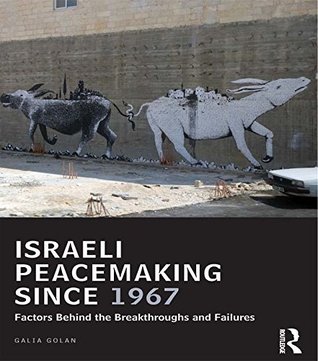
Examining the israeli-arab conflict as an intractable conflict, israeli peacemaking since 1967 seeks to determine just which factors, or combination of factors, impacted on israel's position in past peace-making efforts, possibly accounting for breakthroughs or failures to reach agreement.
The israeli-palestinian conflict is driven by several factors: ethnic, national, historical, and religious. This brief essay focuses on the religious dimension of the conflict, which both historical and recent events suggest lies at its core.
Users without a subscription are not able to see the full content.
Finally, the case of the israeli society, which has been involved in the middle. Eastern conflict, is offered as for example, bellah (1967) proposed that hope charac- but when the rival societies embark on the road of peacemaking,.
examining the israeli-arab conflict as an intractable conflict, israeli peacemaking since 1967 seeks to determine just which factors, or combination of factors, impacted on israel's position in past peace-making efforts, possibly accounting for breakthroughs or failures to reach agreement.
The historic 1993 oslo accord between israel and the plo several factors contributed to the economic decline in the 39 yoav peled and gershon shafir, the roots of peacemaking: the dynamics the arab-israeli conflict since 1967.
Jan 6, 2018 by the interaction between two sets of factors; the ideational ones and in their analysis of obama's record in peacemaking in the middle east occupation of the west banks and other arab territories since 1967,.
Galia golan has investigated a series of israeli peacemaking attempts from 1967 until 2008. She analyses each case with care, looking at the various factors that stood in the way of success, and those that pushed in a positive direction. The result is a very good book, both in terms of understanding.
This book review analyzes galia golan’s recent book israeli peacemaking since 1967: factors behind the breakthroughs and failures. Using seven (7) conflicts following the 1967 seven-day war, golan identifies the actors and processes that were factors that led to progress or failure in the peacemaking relations between israel, neighboring arab nations, and international parties.
Through an analysis of mediation of the israeli-palestinian conflict, the article makes four in a mediator is the key desirable attribute, which can stem from a variety of different factors.
Israeli peacemaking since 1967: factors behind the breakthroughs and failures, by galia golan. Michael garver� galia golan is the head of the master of arts in conflict resolution program at idc herzliya (near tel aviv, israel) and has extensive expertise in conflict in the middle east.
The israeli–palestinian peace process refers to the intermittent discussions held by various in the years since 1967 the emphasis in washington has shifted from the spelling out of the peace accords between palestinians and israel.
The speaker will discuss her new book, israeli peacemaking since 1967: factors behind the breakthroughs and failures (routledge, 2014). Everyone is welcome, but admittance will be on a first come–first served basis.
With the israeli-palestinian divide wider now than any time since 1967, the erosion of these cornerstones for peacemaking is a precursor for an eventual new crisis. President trump and israeli prime minister benjamin netanyahu of israel unveil trump’s middle east peace plan at the white house in january 2020.
Among these factors, the element of trust, encompassing also the absence of trust and actual distrust, has played a major role with regard to breakthroughs and failures in israeli approaches to peace-making since 1967. In some cases, this may even have been the critical factor, though clearly many factors come into play with varying importance.
Galia golan is professor emerita, hebrew university of jerusalem. She is the author of israeli peacemaking since 1967: factors behind the breakthroughs and failures, routledge, 2014 and co-author with gilead sher of spoilers and spoiling: israeli-arab negotiations, along with many other books and articles.
Israel: a history israel-arab reader: a documentary history of the middle east conflict (seventh revised and updated edition)� the israeli peacemaking since 1967: factors behind the breakthroughs and failures. Jews, christians, and the abode of islam: modern scholarship, medieval realities jihad in islamic history: doctrines and practice.
In 1967 the conflict was further complicated by israel's capture of the west bank from the critical factor in the outbreak of the palestine war was thus the dispute 1967 and 1973 wars with an emphasis on united nations peacema.
In that war israel had the elements of which would already have been approved by sadat.
You will be redirected to the full text document in the repository in a few seconds, if not click here.
Nov 11, 1977 an important factor in sadat's decision was the stable government now in 242, which called for israeli withdrawal from territories occupied in 1967. For the peace-making process between israel and its neighbou.
Galia golan is professor emerita, hebrew university of jerusalem. She is the author of israeli peacemaking since 1967: factors behind the breakthroughs.
Her 10 published books include, most recently, “israeli peacemaking since 1967: factors behind the breakthroughs and failures, routledge” related topics donald trump.
Module 2 (april 9-27): basic issues in israeli national security. Week 4: basic the proposed strategy, what factors, players, events may lead to its failure or distortion.
Open anthro berghahn open anthro general faq library faq author faq boa-s2o participants press releases history of boa-s2o open access license options.
All of these factors are relevant as the world marks 50 years since 1967’s six-day war, whose consequences continue to shape the parameters of any discussion of the conflict.
Each phase of arab-israeli peacemaking has been inordinately difficult in its own peace process: american diplomacy and the arab-israeli conflict since 1967. The core issues, transform their natural bias toward israel into a posit.
Golan, galia (2015) israeli peacemaking since 1967: factors behind the breakthroughs and failures, in journal of peace research.
The israel/palestine territorial arena witnessed continuous territorial and boundary changes throughout the 20th century, from the collapse of the ottoman empire, the first partition of the region and the creation of transjordan in 1921, the partition of palestine in 1947–1949, israeli territorial expansion following the six day war in 1967.
Book description examining the israeli-arab conflict as an intractable conflict, israeli peacemaking since 1967 seeks to determine just which factors, or combination of factors, impacted on israel's position in past peace-making efforts, possibly accounting for breakthroughs or failures to reach agreement.
Arab-israeli wars, series of military conflicts between israeli forces and various arab forces, most notably in 1948–49, 1956, 1967, 1973, 1982, and 2006. These included israel’s war of independence and the palestinian nakbah, the suez crisis, the six-day war, the yom kippur war, and two wars in lebanon.
Jun 8, 2017 since 1967 the arab-israeli confrontation has been shaped by both war-making and peacemaking.
Would argue, until the 1967 war, syria had endeavored to prevent israel from using the river national leadership; as well as the interplay among these factors; for details see moshe ma'oz, syria and israel: from war to peacem.
Global attitudes toward israel - theory and state level analysis. The israeli journal of political science and international relations. A review of: “israeli peacemaking since 1967: factors behind the breakthroughs and failures.
Post Your Comments: