Read Online Toxicological Risk Assessment of Chemicals: A Practical Guide - Elsa Nielsen file in PDF
Related searches:
Basic toxicology terms-toxicity is a measure of the intrinsic poisonousness of a substance (agent), irrespective of where it is or how it is being handled. (eg: chlorpyriphos acute oral ld50 (rats): 483mg/kg, whether it is in a locked pesticide storeroom, or in a home kitchen)-hazard is the potential for poisoning to occur, based on environmental, social or host factors-risk is a numerical.
Toxicological risk assessment (tra) has been an important tool in the safety assessment of biomedical device, providing a chemical-based approach which complements a traditional animal-based testing program. The need for tra is growing and in some cases, will be considered as a means of circumventing animal testing in the safety evaluation of devices.
Minimizing product risk through toxicological risk assessment (tra) testing the substance toxicity of everyday consumer products is a growing concern for the public, and for good reason. Ongoing research continues to find new links between daily chemical exposure and health problems, ranging from allergic reactions to serious lifelong effects.
Toxicological principles for the safety assessment of food ingredients2 (redbook 2000) is the new name for toxicological principles for the safety assessment of direct food additives and color.
Since 2003, toxservices has excelled at assessing and analyzing toxicological risk related to human health.
The basics and importance of toxicological risk assessment in compliance with iso 10993-17: 2002 will also be discussed during the session which is an essential information required by the notified body.
Risk analysis encompasses the scientific review and evaluation of all relevant scientific data on the toxicity of, and the exposure to, a certain compound or mixture. To enable a systematic analysis of the different types of information needed, various risk analysis paradigms have been developed.
Risk assessment is a systematic approach to assessing the potential health risks associated with exposure to known or potentially toxic agents.
May 20, 2020 while the toxicology community is making progress in extrapolating irritation and sensitization thresholds from toxicological data, these.
Toxicological risk assessment of bisphenol a released from dialyzers under simulated-use and exaggerated extraction conditions regul toxicol pharmacol� 2020 dec;118:104787.
Jul 15, 2019 this paper will highlight the limited extent to which the ans panel's risk assessment of the artificial sweetener aspartame was in practice.
Introduction to threshold of toxicological concern (ttc) approach in chemical risk assessment. Little pro on 2018-03-13 views:� threshold of toxicological concern (ttc) is a principle that refers to the establishment of a generic exposure level for all chemicals below which there would be no appreciable risk to human health.
Feb / mar 2021: training program on biocompatibility and toxicological risk assessment of medical devices – the notified body perspective training 1 day; about the course. Bio-compatibility is the biological evaluation of medical devices in compliance with the standard iso 10993-1: 2018.
Intrinsik's team of experienced toxicology and regulatory professionals delivers high quality toxicological risk assessments to highlight potential adverse health.
The risk assessor estimates real world risk by combining information on toxicity and exposure.
•risk is a statistical expression of probability on a population basis(not individual); risk can be expressed as relative or absolute •the probability of expression of a specified risk is a function of both the intrinsic toxicological properties ( hazard) and the frequency, duration and intensity of exposure.
One-hundred years of toxicological risk assessment the problem of identifying safe levels of human exposure to chemicals exhibiting toxicity (which virtually.
Feb 21, 2008 unlike many existing books on toxicology that cover either toxicity of a particular substance or toxicity of chemicals on particular organ systems,.
In the context of toxicology, risk assessment is recognized under the cercla statutes in that environmental testing may serve as a marker for exposure based on risk. Atsdr (the agency for toxic substances and disease registry) has established criteria to determine when medical monitoring is an appropriate health activity and the requirements for establishing a medical monitoring program at a site:.
Oct 10, 2020 pdf mathematical models are important tools for environmental management and risk assessment.
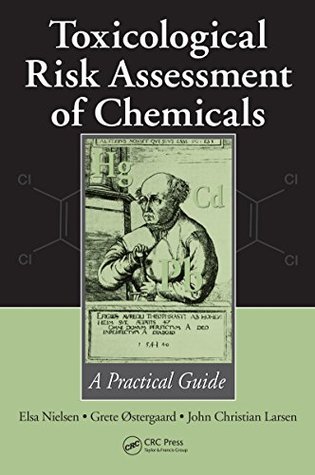
Unlike many existing books on toxicology that cover either toxicity of a particular substance or toxicity of chemicals on particular organ systems, toxicological risk assessment of chemicals: a practical guide lays out the principle activities of conducting a toxicological risk assessment, including international approaches and methods for the risk.
5 ppb and 1 part per million (ppm), genetic toxicity tests and/or subchronic tests are recommended.
Toxicological risk assessment (tra) product safety is a primary concern for all stakeholders in today’s marketplace. Intrinsik’s team of experienced toxicology and regulatory professionals delivers high quality toxicological risk assessments to highlight potential adverse health risks associated with a product formulation.
Risk assessment is the quantitative cognitive step through which we attempt to predict the clinical course for the individual patient. It enables us to predict a benign course or one that might require further investigations, supportive care only (including early intubation or decontamination), or early initiation of specific therapeutic interventions (such as haemodialysis or administration of specific antidotes).
Toxicological risk assessment (tra) has been an important tool in the safety assessment of biomedical device, providing a chemical-based approach which.
Feb 21, 2018 in addition to the biological safety testing completed, the overall safety and the associated toxicological risk of exposure to degradation products.
Toxicological risk assessments of iron oxide nanocluster- and gadolinium-based t1mri contrast agents in renal failure rats qinjie weng zhejiang province key laboratory of anti-cancer drug research, college of pharmaceutical sciences, zhejiang university, hangzhou 310058, china.
The substance toxicity of everyday consumer products is a growing concern for the public, and for good reason. Ongoing research continues to find new links between daily chemical exposure and health problems, ranging from allergic reactions to serious lifelong effects. A toxicological risk assessment (tra) is necessary for manufacturers of just about any product to ensure that they are not unintentionally releasing hazardous substances into their consumers’ bodies or the environment.
Unlike many existing books on toxicology that cover either toxicity of a particular substance or toxicity of chemicals on particular organ systems, toxicological risk assessment of chemicals: a practical guide lays out the principle activities of conducting a toxicological risk assessment, including international approaches and methods for the risk assessment of chemical substances.
Feb 4, 2020 one of the cornerstones of biocompatibility evaluations is the use of toxicological risk assessment to screen for potential hazards and safeguard.
Jun 5, 2019 toxicological risk assessment of plant protection products. On 13 and 14 march 2018, the regulated products assessment department (depr).
Balances any identified risks with the clinical benefit to the patient using known levels of identified compounds and any other.
Our toxicology risk assessment (tra) services include: evaluation of the toxicity of the individual chemical ingredients of the formulation used to manufacture the product: each ingredient is assessed for its hazard or inherent toxicity such as acute toxicity, skin/eye irritancy, potential for skin sensitization, reproductive, genotoxic, or carcinogenic activity, in relation to the potential for consumer exposure to the chemical.
The concept that “safe levels of exposure” for humans can be identified for individual chemicals is central to the risk assessment of compounds with known toxicological profiles.
Technical analysis of potential for risk to aid in site decision making and closure, and toxicology review of chemicals used in industry.
Jan 3, 2019 systems toxicology integrates traditional laboratory testing with quantitative modeling of large data sets to identify the biological networks affected.
Toxicological risk assessments address the risks associated with exposure to potentially haz-ardous substances and can be conducted in one of two ways. The first is a proactive approach in which the safety of a given substance is evalu-ated prior to exposure. This approach can be used as a tool to find substances of concern and set limits for them.
Risk assessment, and be grounded in one of its many disciplines, in order to make a good practitioner. Written by expert risk assessment scientists, who nevertheless are still learning themselves, this book will encompass the traditional areas of hazard identification– both toxicology and epidemiology evaluation, dose-response assessment, exposure.
Abstract risk analysis encompasses the scientific review and evaluation of all relevant scientific data on the toxicity of, and the exposure to, a certain compound or mixture. To enable a systematic analysis of the different types of information needed, various risk analysis paradigms have been developed.
Animal-free toxicity testing and risk assessment for the 21st century.
Toxicological risk assessment and multi-system health impacts from exposure highlights emerging problems of human and environmental health attributable to cumulative and multiple sources of long-term exposure to environmental toxicants. The book describes the cellular, biological, immune, endocrine, genetic and epigenetic effects of long-term.
Our experienced toxicologists, chemists and microbiologists can evaluate your ingredients and products for any potential adverse health or environmental effects from naturally occurring or synthetic agents in your manufacturer’s formulations. Risk assessment typically includes an estimate of the probability of harm and a clear description of the various assumptions and uncertainties that go into the risk assessment.
Risk analysis encompasses the scientific review and evaluation of all relevant scientific data on the toxicity of, and the exposure to, a certain compound or mixture. To enable a systematic analysis of the different types of information needed, various risk analysis paradigms have been developed. Among these, the scheme developed in 1983 by the us national academy of sciences (nas) has been the most widely utilized.
We offer toxicological risk assessment (tra) services to evaluate risks to patient health by assessing the leachates of a system against information on in vitro tests�.
Toxicological risk assessment of medical devices is the overall risk characterization. During this step, the benefit of the medical device and the risks associated with the device (which were identified and characterized in the previous steps) are weighed and an assessment provided.
Risk assessment is the quantitative cognitive step through which we attempt to predict the clinical course for the individual patient. It enables us to predict a benign course or one that might require further investigations, supportive care only (including early intubation or decontamination), or early initiation of specific therapeutic interventions (such as haemodialysis or administration.
Toxicological risk assessments are written to provide a thorough vetting of the chemicals from your extractables.
Toxicological risk assessment (tra) evaluating the potential health risks associated with exposure to leachable impurities, contaminants, or other residues in a medical device or drug product is crucial to patient safety. Toxikon can help you evaluate options and develop approaches that meet regulatory requirements efficiently and effectively.
Toxicological risk assessment of bisphenol a released from dialyzers under simulated-use and exaggerated extraction conditions. Bisphenol a (bpa) belongs to a group of chemicals used in the production of polycarbonate, polysulfone, and polyethersulfone which are used, among other applications, in the manufacture of dialyzers.
A toxicological risk assessment also requires knowledge through full quantitative disclosure of the individual ingredients and constituents in e-liquid. This requirement sounds obvious, but besides the commercial sensitivity of flavour recipes and sub-flavours, challenges surround consistency and identification of constituents, especially for ingredients of natural origin.
Nov 3, 2020 risk assessment is the quantitative cognitive step through which we attempt to predict the clinical course for the individual patient.
Absorption of toxic substances via the skin is an important phenomenon in the assessment of the risk of exposure to these substances.
Another form in which risk is presented is a drinking water or air concentration providing cancer risks of 1 in 10,000; 1 in 100,000; or 1 in 1,000,000. Development of these hazard identification and dose-response assessments for hydrogen sulfide has followed the general guidelines for risk assessment as set forth by the national.
Toxicological risk assessment goal: where possible, obviate the need for expensive and time-consuming animal testing by using in-vitro and/or computational capabilities to establish acceptable risk exposure assessment toxicity/hazard assessment chemical characterization exposure models in-vitro testing computational toxicology saline water hexane.
Generally, the assessment of hazard and risk to humans that might arise from exposure to chemical substances is based on the extrapolation from data generated.
Toxicological principles for the safety assessment of food ingredients; public meeting on updates and safety and risk assessment considerations; extension of comment period a notice by the food and drug administration on 02/02/2015.
Post Your Comments: