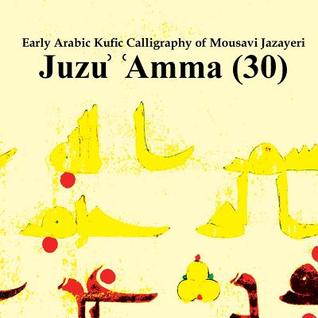
Read Online Early Arabic Kufic Calligraphy of Mousavi Jazayeri: Juzu' 'Amma (30) - S.M.V. Mousavi Jazayeri | PDF
Related searches:
Kufi was the major priestly script in early times� it was created after the establishment of the two muslim cities of basrah and kufah in the second decade of the islamic epoch ( 8th century a�d�.
The kufic and naskh styles were the first to be used by the ancient arabs.
Kufic, see image to the left, was then the common style of calligraphy. Thus the first qurans were in kufic, the oldest form of the arabic script.
It is a as the oldest arabic script, kufic was used during the early islamic period for copying the koran�.
Dec 13, 2020 calligraphy kūfic script in calligraphy earliest extant islamic style of handwritten alphabet that was used by early muslims to record the qurʾān.
Feb 20, 2018 kufic style (or hiri): kufic calligraphy is commonly used in arabic countries such as syria and iraq.
The kufic and naskh scripts were the two major scripts which were developed for arabic writing. The kufic script is the first script arab calligraphers used to write.
750-800 ad is a unique combination of several aspects of early kufic calligraphy style.
Square kufic calligraphy is a decorative art that simultaneously has rigid rules and a lot of room for creativity. The strictness of square kufic is in its geometry: all shapes are built from squares, and the thickness of all shapes and spaces between them needs to be equal.
Very early arabic script was rarely used, because of the culture's strong oral tradition.
Early calligraphic script: al-jazm the first form of an arabic-like alphabet is known as the al-jazm script, which was used by northern tribes in the arabian peninsula.
Kufi script, named after the town of kufa in southern iraq that was the islamic capital in the caliphate of ali, was the first of the styles to develop.
A kufi square (kufic murabba') arabic calligraphy version of an arabic proverb translated arabic kufic script of his majesty king abdullah ii bin al-hussein.
Mar 28, 2017 in palermo, sicily, bear inscriptions in kufi, the early arabic script. The arabic alphabet is a script of 28 letters and uses long but not short.
“in general, the kufic script was the first of arabic calligraphy. It has more than 500 types, some of which have remained, disappeared and are being developed,” said al-rashidi.
From top to bottom:early kufi, eastern kufi, foliate kufi, knotted kufi, and square kufi.
The first form of arabic calligraphy in the 7th century, was the kufic script and since then, there have been many variations of arabic calligraphy that have.
Dec 13, 2020 it is considered to be the earliest arabic script, dominating calligraphy during the first two centuries of islam.
Early kufic was the triggering spark for the art of calligraphy’s magnificent journey through the islamic era, a journey which has lasted for more than 14 centuries.
Buy early arabic kufic calligraphy of mousavi jazayeri: juzu' 'amma (30) at desertcart.
Kufa is the city that gave its name to kufic, the earliest example of a universal calligraphic style and a favored script for transcription of the holy qur'an.
A handbook of early arabic kufic script: reading, writing, calligraphy, typography, monograms a comprehensive textbook of the early arabic kufic script, written as a complete reference book for calligraphers, designers, and students of art history and the history of arabic language and script.
Aug 10, 2018 kufic is the most oldest and elegant form of arabic calligraphy. Kūfic script, in calligraphy, earliest extant islamic style of handwritten alphabet.
Jun 5, 2008 the kufic script is the first script arab calligraphers used to write g manuscripts of the holy quran on parchment rolls.
Pseudo-kufic, or kufesque, also sometimes pseudo-arabic [citation needed], is a style of decoration used during the middle ages and the renaissance, consisting of imitations of the arabic kufic script, or sometimes arabic cursive script, made in a non-arabic context: imitations of arabic in european art are often described as pseudo-kufic, borrowing the term for an arabic script that.
Painted in the long, elegant strokes of kufic script, this plate's inscription is among the most beautiful examples of calligraphy from the early islamic period.
Kūfic script, in calligraphy, earliest extant islamic style of handwritten alphabet that was used by early muslims to record the qurʾān. This angular, slow-moving, dignified script was also used on tombstones and coins as well as for inscriptions on buildings.
Kufic is the oldest calligraphic form of the various arabic scripts. The name of the script derives from kufa, a city in southern iraq which was considered as an intellectual center within the early islamic period.
Arabic and its alphabet rose to prominence with the rise of islam in the seventh century, arabic being the sole language of islam’s sacred text, the qur’an. After its adoption as the administrative language of the early muslim empires, it quickly spread from spain to india in the following centuries.
Mousavi jazayeri, a known iranian calligrapher, researcher, graphic designer, and expert of early arabic kufic script, was born in 1969 and holds a bachelor of art in graphics. He has published extensively, including several known books, and held numerous workshops on reviving the early kufic calligraphy style.
He then analyzes kufic script, the preeminent vehicle for writing early manuscripts of the qur'an; reforms of calligraphy in the 10th century; and the great master.
Pseudo-kufic, or kufesque, also sometimes pseudo-arabic, is a style of decoration used during the middle ages and the renaissance, consisting of imitations of the arabic kufic script, or sometimes arabic cursive script, made in a non-arabic context: imitations of arabic in european art are often described as pseudo-kufic, borrowing the term for an arabic script that emphasizes straight and angular strokes, and is most commonly used in islamic architectural decoration.
See more ideas about calligraphy, islamic art, islamic calligraphy.
A comprehensive textbook of the early arabic kufic script, written as a complete reference book for calligraphers, designers, and students of art history and the history of arabic language and scripts.
The arabic script has different forms ranging from different periods to distinct lands. The script lacked the dots and accents that are prevalent in modern day arabic and went out of favour in by the 12th century.
The kufic script is one of the oldest arabic scripts that persisted in common use until the 13th century. Its name refers to the city of kufa in iraq, where it first.
Calligraphy - calligraphy - arabic calligraphy: in the 7th and 8th centuries ce the arab followers of muhammad conquered territories stretching from the shores of the atlantic to sindh (now in pakistan). Besides spreading the religion of islam, the conquerers introduced written and spoken arabic to the regions under their control. The arabic language was a principal factor in uniting peoples.
Arabic script originated in the hejaz, as nabatean inscriptions when the early arabic script first appeared.
You can read a handbook of early arabic kufic script reading writing calligraphy typography.
Following the arabic musnad and al-jazm, the kufic script evolved as the next stage of arabic calligraphy’s development. Unlike those two old scripts, we can identify known letter shapes in the early development of the kufic script.
The corporate logo in kufi font the kufic script also appears in a political context to evoke the connection between the early days of islam's rapid expansion.
Kūfic script, in calligraphy, earliest extant islamic style of handwritten alphabet that was used by early muslims to record the quran.
Apr 22, 2020 a handbook of early arabic kufic script: reading, writing, calligraphy, typography, monograms.
Square kufic calligraphy is a well-defined style of calligraphic design developed originally for architectural applications and it has a history of at least seven centuries (sakkal 2006).
Post Your Comments: