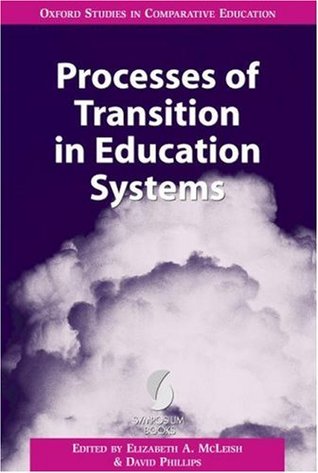
Download Processes of Transition in Education Systems (Oxford Studies in Comparative Education) - Elizabeth A. McLeish (Editor) | ePub
Related searches:
Challenges of secondary education and transition services for youth with disabilities. Since the mid-1980s, the efficacy of public education programs overall has been challenged by policymakers, business leaders, professionals, and the general public.
During the planning process, schools and vr agencies work together to identify the transition needs of students with disabilities, such as the need for assistive.
Transition in special education programs, in general, refers to the movement from one program to another.
The transition process requires that school personnel establish relationships with agencies, organizations, and educational institutions in the adult sector. These relationships involve, at a minimum, sharing information through communication and, ideally, establishing effective collaborative associations.
Transition in special education programs, in general, refers to the movement from one program to another. The official term, however, usually refers to the transition from school-based to adult services.
The department encourages districts to prepare all students for career and college readiness. The programs, resources, and services included in these guidelines demonstrate best practices in serving students with disabilities as they transition from secondary to post-secondary activities such as postsecondary education, vocational education, integrated employment (including supported.
Individuals with disabilities education improvement act of 2004 infants and toddlers to preschool or kindergarten school the transition planning process.
The association for childhood education international (acei) is in transition. First, the acei executive director, jerry odland, who has given 23 years of service, has left acei.
The transition process involves identifying the strengths, needs, and preferences of the individual, across multiple settings, including school, work, home, and community.
A systematic transition process contributes to the probability that students will have better post-school outcomes.
(a) is designed within an outcome-oriented process, which promotes movement from school to post-school activities, including post-secondary education,.
Which students need transition planning and when? a process designed to plan for life after graduation, through identifying dreams, goals,.
For the special needs child, however, “transition” has a very specific meaning. It is part of the overall individualized education program, or iep, and it defines the move from public school to adult life. The iep transition plan, as it is called, is required by law for students with a learning disability.
Transition planning for high school students has been going on in some formal process with its own set of paperwork from that of the individual education plan.
T he first day of school marks the successful transition from play-based education to our traditional education system. Children will still engage in playful activities while studying at school, but these will change slowly to more theoretical focused approaches in order to teach math, reading and writing.
At the heart of the transition process is the transition plan. To develop this plan, the iep team will work with your child to identify strengths and interests.
The transition plan should also list any non-educational agencies that might provide your child with additional support.
Parents can smooth the transition by meeting with the both general education and special education teachers before the start of school to discuss their methods.
Secondary transition refers to the process a student with a disability goes through as they move from high school to whatever comes next, including postsecondary education, employment and independent living.
Use the following guidelines, tools, and resources to strengthen your transition processes. Reentry education providers should work closely with their partners to assess students’ needs and risks, identify services and support needed, and develop a service delivery schedule that takes into account various transition points.
We, at harvard family research project, define transition as a process—not just a one-time event—that begins during children's preschool years and continues.
Need during the transition process and after high school (national council on disability, 2007). • blending career-oriented and academic courses could help.
Post Your Comments: