Download Routine Activity and Rational Choice: Volume 5 - Ronald V Clarke | PDF
Related searches:
Rational Choice, Routine Activities, and Crime Pattern Theory
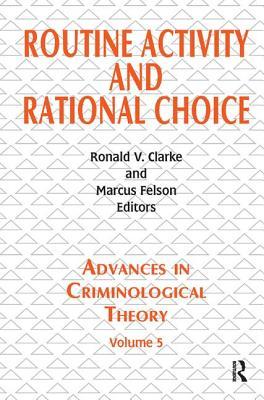
Routine Activity and Rational Choice: Volume 5
Routine Activity Theory and Rational Choice Theory 123 Help Me
Routine Activity Theory And Rational Choice Theory - 1180 Words
Theories of action in criminology: Learning theory and rational
Routine Activity and Rational Choice - Google Books
Amazon.com: Routine Activity and Rational Choice (Advances in
Chapter 3: Rational Choice And Routine Activities Theory
Routine Activity and Rational Choice Taylor & Francis Group
Routine Activity and Rational Choice: Volume 5 - 1st Edition
ROUTINE ACTIVITY THEORY AND RATIONAL CHOICE THEORY
Routine Activity and Rational Choice: Volume 5 - Richard D
102102585 Routine Activity and Rational Choice Clarke Ronald v y
Situational Crime Prevention and its Discontents: Rational Choice
Identity theft and routine activities - ThinkIR - University of Louisville
Routine Activity and Rational Choice - Sociologia Pontofrio
Routine Activity and Rational Choice: Volume 5 by Ronald V
Rational Choice Theory and Routine Activities Theory Custom
Domestic and intimate violence: An application of routine
Routine Activity and Rational Choice: Volume 5: Vol 5
Situational Crime Prevention: Crime and Justice: Vol 19
PDF Routine Activity And Rational Choice Free Online Books
Rational Choice, Routine Activities and Situational Crime
Rational Choice Theory And Juvenile Delinquency - 2372 Words
Routine-Activities Theory [Criminology] Law and Legal Definition
Environment, Routine, and Situation: Toward a Pattern Theory
Download [PDF] Routine Activity And Rational Choice Free Books
Deterrence, Rational Choice, and Routine Activities or
Chapter 15_ Deterrence, Routine Activity, and Rational Choice
Routine Activity and Rational Choice by Marcus Felson (2004
Rationality, Emotion, and Criminal Behavior
RATIONAL CHOICE THEORY: ASSUMPTIONS, STRENGHTS, AND GREATEST
Routine Activities and Individual Deviant Behavior
Results for 'ti:Routine Activity and Rational Choice
Chapter 15: Deterrence, Routine Activity and Rational Choice
(PDF) Rational Choice Theory and Crime - ResearchGate
PPT – Routine Activity Theory and Rational Choice Theory
Routine Activity and Rational Choice - Ronald V Clarke
Emile Durkeim, rational choice theory, Sykes and Matza
Smartphone Addiction and Cybercrime Victimization in the
Amazon.com: Customer reviews: Routine Activity and Rational
PPT – Routines, Creativity and Rational Choice PowerPoint
Routine Activities and Rational Choice Theories
Routine activity and rational choice by Clarke, R. V. G
The Rational Choice Theory and Mexican Drug Activity
“Rational Choice” and Opportunity Theories
IJERPH Free Full-Text Smartphone Addiction and Cybercrime
Rational choice and routine activities theory suggest that we can remove or limit the opportunity to offend by changing the environment. This has been the preferred strategy in the uk benefit of this approach over incapacitation.
Routine activity- “if an opportunity is a necessarycondition for crime to occur, then crime can reducedby removing the opportunity to complete the act”. Rational choice theory- “but in the end, crime is notsimply due to underlying motivation orpredispositions; it is also involves a concrete choice”.
Routine activities theorybr / routine activity theory is a sub-field of rational choice and criminology, developed by marcus felson and lawrence e cohen. Routine activity theory says that crime is normal and depending on the circumstances crime will be committed.
Rational choice is a perspective that criminologists have incorporated with many other theories like routine activities theory.
The rational choice perspective whereas routine activities theory describes the necessary elements of a criminal event and the controllers who can disrupt that event, the rational choice perspective addresses the processes by which offenders make decisions.
(fbi profile) rational choice crimes burglary: rational choice theory states that people are rational, so the decisions they make can be judged, and they can be punished if their actions go against the best interest of society. This explains burglary because people generally act to maximize pleasure and minimize pain.
Theory, a modified version of the routine activities theory, and the rational choice model. While each paradigm seeks to describe the conflict from the perspective of class warfare or a lack of civic guardianship, one theme that has been repeated throughout much of the available literature is the erosion of state institutions throughout mexico.
Ethics as rational choice john hooker tepper school of business carnegie mellon university revised february 2008 ethics can be viewed as rational choice. A decision must have a consistent rationale behind it, or else it is not an ethical decision. Rationality may not be a sufficient criterion for ethical choice, but it is necessary.
In addition, the routine activity approach suffers from the same weaknesses as the rational choice theory and the deterrence theories: because there, too, a rational and therefore deterrent person is assumed, but emotional, psychological, social and developmental factors are ignored.
Routine activities theory the rat central elements are considered to be associated with any type of battery, violent crime, and or aggravated assault that tends to be cleared by arrest. Split-second decisions are nonetheless, rational choices that result in action, which is important to the current study.
Routine activity theory, first formulated by focus of routine activity is the study of crime as an event such as “rational choice,” sufficiently distant from theories.
Most commonly associated with opportunity theories, situational crime prevention and routine activities theory, rational choice is widely used by administrative and conservative criminologists interested in developing practical, if not pragmatic, ways of reducing or preventing crime.
Routine activities theory, which assumes freedom of action and rational choice, is used here to analyze patterns of intimate violence, especially, child sexual abuse. Marcus felson's model of predatory crime provides a unique interpretation of intimate violence.
Find helpful customer reviews and review ratings for routine activity and rational choice (advances in criminological theory) at amazon.
Routine activity theory a sub-field of rational choice criminology, developed by marcus felson and lawrence cohen. Routine activity theory says that crime is normal and depends on the opportunities available. If a target is not protected enough, and if the reward is worth it, crime will happen.
Routine activity analyzes the criminal event, and avoids motivations and psychology as topics for discussion, whereas rational choice approaches crime as purposive behavior designed to meet the offender's commonplace needs, such as money, status, sex, and excitement.
Rational choice and routine activities theory both hold that crime rates are a product of criminal opportunity. It is thus thought that by increasing the number of guardians, decreasing the suitability of targets or reducing the offender population, the crime rate should decline.
Routine activities theory is a theory of criminology that for a crime to occur, three elements must be present: (1) a person motivated to commit the offense, (2) a vulnerable victim who is available, and (3) insufficient protection to prevent the crime. Therefore, if a target is not protected enough, and if the reward is worth it, crime will.
Routine activities theory: three key components to this theory: motivated offenders, suitable targets, and a lack of capable guardians. When sokha was 7, she lived in cambodia and was raised by her poor mother.
This is due, in part, to recent attempts to marry routine activities with other theories of crime such as rational choice (clarke and felson 1993), situational crime.
Deterrence, rational choice, and routine activities or lifestyle theories of crime. His section will discuss the early aggregate studies of deterrence in the late 1960s, then the perceptual studies� of the 1970s, and finally the longitudinal and scenario studies of the 1980s and 1990s to the present.
Description: found that burglars use a variety of cues in selecting targets (empirical test of rat) burglar cannot calculate the value of property he/she expects to take away – powerpoint ppt presentation.
Rational choice theory assumes that individuals, or rational actors, try to actively maximize their advantage in any situation and, therefore, consistently try to minimize their losses.
Definition: rational choice theory is an economic theory that assumes that individuals make their decisions based on reason and not impulse or emotions. This assumption is based in the hypothesis that everyone acts towards fulfilling their self-interest by analyzing all the available options rationally.
This volume brings together influential research articles on opportunity theories of crime by leading theorists such as cohen and felson on routine activity theory and clarke and cornish on the bounded rational choice perspective.
Of policy strategies derived from rational choice and routine activities theories according to miro (2014), routine activity theory is related to crime opportunity.
In this vein, and based on the perspective of rational choice and the idea of the controller introduced by routine activity theory, the theory of situational crime prevention has emerged, focused on altering the structures of opportunity of a specific crime by means of different techniques with the goal of increasing effort, increasing risks.
Two new criminological approaches are defined and applied to categories of crime in routine.
Rational choice theory, also known as theory of rational choice, choice theory or rational action theory, is a framework for understanding and often formally modeling social and economic behavior. It dictates that every person, in order to determine whether any task is worth pursuing, will perform their own personal cost and benefit analysis.
Two new criminological approaches are defined and applied to categories of crime in routine activity and rational choice, now available in paperback. Routine activity analyzes the criminal event, and avoids motivations and psychology as topics for discussion, whereas rational choice approaches crime as purposive behavior designed to meet the offender's commonplace needs, such as money, status.
Routine activity theory states that in order for a crime to be committed, three specific criteria must be involved. These criteria are that there must be a motivated offender, a suitable target, as well as the absence of a capable guardian.
A number of theories have addressed the importance of criminal opportunity, including lifestyle-routine activities, environmental design, rational choice, offender.
Both theories together provide a powerful tool for understanding predatory criminal behavior. They both assume that the offender in both theories makes choices.
Routine activity theory on the contrary, approaches such as rational choice operate from a pragmatic perspective of intervention in situational factors and criminal.
Rational choice theory and routine activity theory are two of several different theories used in criminology. These two theories can help a person examine why a person would commit a crime in the first place. In this paper, i will explain that these two theories are as well as compare and contrast the two theories.
Routine activity theory is a sub-field of rational choice criminology, which was developed by marcus felson. Routine activity theory says that crime is normal and depends on the opportunities available.
The foundation of rational choice theory is behavioral choices, that includes the choice of the person to engage in criminal activity based on intent/premedication and that the possible benefits.
Routine activity theory is one of the main theories of “environmental criminology”. The theory states that a crime occurs when the following three elements come.
I'm not sure why or how rational choice and social exchange theories necessarily negate altruistic theories of social cooperation.
Two new criminological approaches are defined and applied to categories of crime. Routine activity analyzes the criminal event, and avoids motivations and psychology as topics for discussion, whereas rational choice approaches crime as purposive behavior designed to meet the offender's commonplace needs, such as money, status, sex, and excitement.
This theory comes from the combination of two theories with a strong situational emphasis: the routine activities theory (rat) and the lifestyle-exposure theory (let). Consistent with rational choice theory� rat focuses on the characteristics of crime rather than on those of the actual offenders�.
Chapter, by using 2003 national crime victimization survey, routine activity theory lifestyle, rational choice, and adolescent fear: a test of a risk-.
The rationality described by rational choice theory is different from the colloquial and philosophical uses of rationality. Rationality means in colloquial language sane or in a thoughtful clear headed manner. Routine activity theory is a sub-field of rational choice criminology, which was developed by marcus felson.
Rational choice and routine activities theories are concerned with crime rather than criminality. A theory called cultural criminology directly opposes both these theories, and it emphasizes the role of emotions in instigating criminal behavior rather than rationality.
Rational choice theory and routine activities theory are two examples of the different theories that criminologist have made. Rational choice theory is “a neoclassical theory asserting that offenders are free actors in their own actions” (walsh and hemmens 536).
While its earliest roots can be traced back to classical criminology, the rational choice theoretical framework has more recently felt the influence of routine activity.
The routine activities theory as deemed to a subset of the rational choice criminology. Crime is believed to be committed not because one is experienced in criminal activities but simply because an opportunity is availed. The opportunity may for instance be availed by the target not being well guard (felson, 1998).
Routine activities theory is a sub-field of rational choice theory developed by marcus felson and lawrence cohen which states that for a crime to occur, three.
Places for understanding crime: rational choice; routine activity theory; and crime pattern theory.
The central concepts that are the body of rational choice theory are decision-making, choices, present centeredness and the opportunity for committing crime. Success in offending, therefore, with drive and develop criminal characteristics leading to a life of criminality.
The theoretical framework is informed by a variety of opportunity theories, including the routine activity and rational choice perspectives.
Chapter 15: deterrence, routine activity, and rational choice theories deterrence theory beccaria’s classical theory was based on rational choice: ppl will break the law if they think that doing so will advance their own interests.
Description: resistance to common misunderstandings of routine/ habitual behavior. As a foundational theory of action, rational choice is beleaguered, to say the least.
This theory is also closely related to rational choice and routine activities theory. The brantinghams believed that there was a much stronger geographic resonation within the thought process of committing crime.
The rational choice theory is that people use reason to make a decision. They weigh the cost and benefits, and the risk and rewards of their actions.
Rational choice theory: in the social sciences, rational choice theory refers to an approach to understanding the behaviors of individuals and societies.
Discusses how rational choice and routine activity theory can be applied to victimology, corporate crime, gun crimes, violent offending, political violence, and kidnapping. The second part of the book discusses how routine activity, opportunity structures, and decision-making processes lead to the commission of specific types of crimes.
Routine activities theory has been described (by me, just now) as one of the key theoretical contributions to the development of situational crime prevention.
Choice theory (routine activity) rational choice theory commonly known as choice theory is based off of beliefs from classic criminology, which believe that individuals freely choose their behavior and are motivated by the pursuit of gratification and the attempt to avoid pain.
One aspect in the rational choice theory that relates to deterrence and classical theorists is routine activity theory.
Routine activities and rational choice theories routine activities theory direct contact predatory violations illegal activities feed off of legal activities three necessary conditions for direct contact predatory crime suitable target lack of capable guardianship motivated offender - assumed criminal motivation assumed motivation is ever-present variation in suitable targets and capable guardianship explains crime patterns explaining crime patterns increase in household burglary 1950-1980.
Second, someone with a relationship to the potential offender exercises control over that person to adhere to the social bonds. (12) this subtle change reflected the rational choice concept within the framework of the routine activity theory.
The concept of opportunity is therefore important in explaining why crime incidents occur across persons and their property. Cohen and marcus felson, offers an account of how opportunities for crime arise through the day-to-day activities carried out by individuals to meet their needs.
The routine activity theory and rational choice theory are essential in the field of security. The routine activity theory suggests that crime requires three elements for it to take place. Secondly, there is a suitable target, and finally, there is an absent capable guardian.
The rational choice perspective in criminology has evolved largely from two previous and complementary explanations of human behavior.
Years has been the lifestyle-routine activities theory (l-rat). This theory comes from the combination of two theories with a strong situational emphasis: the routine activities theory (rat) and the lifestyle-exposure theory (let).
Clip makes it super easy to turn any public video into a formative assessment activity in your classroom.
Motivation can increase, when the option of crime is the only viable choice available for an offender to achieve their goals. Another deterrence that influences the routine activities that produces crime is the moral beliefs and socialization of the offender.
Crime prevention are based on the assumption that criminals make a rational choice to commit a crime.
This section will also discuss the development of rational choice theory in economics and its later application to crime. Finally, it will examine the use of routine activities theory or lifestyle theory as a framework for modern research and applications for reducing criminal activity.
Routine activity theory relies on the same rational choice methodology as situational crime prevention techniques. As in any theory, routine activity theory has its criticisms. One of the primary criticisms is the assumption that criminals are rational in their decision making.
Routine activity theory – followers of the routine activity theory believe that crime is inevitable, and that if the target is attractive enough, crime will happen; effective measures must be in place to deter crime from happening.
When a criminal goes through the rational choice, they may also be deterred from committing the crime all together. According to the textbook, the routine activities theory is defined as a theory that views crime and victimization as a unction of peoples everyday behavior, habits, lifestyle, living conditions, and social interactions.
The rational-choice perspective posits that most crime is the product of a deranged mind. True victim precipitation refers to situations where the victims initiate the confrontation that leads to their death.
Since then, the theory has been expanded upon and extended to include other perspectives, such as deterrence, situational crime prevention, and routine activity.
Routine activity analyzes the criminal event, and avoids motivations and psychology as topics for discussion, whereas rational choice approaches crime as purposive behavior designed to meet the offender's commonplace needs, such as money, status, sex, and excitement. These conceptual models are both employed to analyze such crimes as drunk driving, gun use, kidnapping, and political violence.
Rational choice theory says individuals rely on rational calculations to make rational choices that result in outcomes aligned with their best interests.
Post Your Comments: