Read Online Biogeology: Evolution in a Changing Landscape - Bernard Michaux | PDF
Related searches:
Aug 30, 2017 historical patterns of diversity, biogeography and faunal turnover remain indonesia: implications for wallacean biogeography and evolution.
In this review, we describe recent advances in the study of the transmission, pathogenesis and evolution of human noroviruses, and consider the ongoing risk of norovirus outbreaks, together with the future prospects for therapeutics, in a rapidly changing world.
But evolution did not reach the status of being a scientific theory until darwin’s grandson, the more famous charles darwin, published his famous book on the origin of species. Darwin and a scientific contemporary of his, alfred russel wallace, proposed that evolution occurs because of a phenomenon called natural selection.
With evolutionary processes, through vicariance or through merging of biotas, whilst ecological processes cause changes in pattern through biotic interactions.
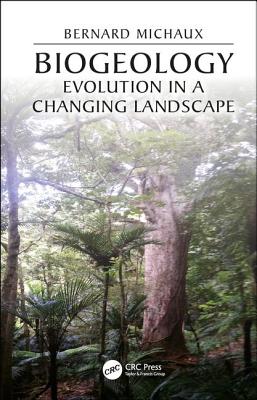
Biogeology: evolution in a changing landscape (crc biogeography series) by bernard michaux english july 15, 2019 isbn: 0367147939, 0367147238 pdf 286 pages 195 mb info: if the website you are visiting breaks any laws or moral rules, please report it to us at admin[@]onion.
For scientists who study evolution, biogeography is often an important part of their analysis, because it provides compelling proof for their theory. This is because many geographical features, such as oceans, rivers, mountains and islands, provide barriers to species, allowing scientists to observe how they evolve separately from one another.
We sometimes think of evolution as a thing of the past, but it continues today, especially as environmental pressures force humans and animals to adapt to survive.
Evolution explains why: the local, native species have all evolved together and thus have evolved ways to deal with local threats or to take advantage of local resources. The sudden introduction of a new species for which no one has any defenses means that this new species can run rampant with little or no competition.
Biogeology: evolution in a changing landscape� a journey through space, time and form.
Rapid evolution of traits and of plasticity may enable adaptation to climate change, yet solid experimental evidence under natural conditions is scarce. Here, we imposed rainfall manipulations (+30%, control, −30%) for 10 years on entire natural plant communities in two eastern mediterranean sites.
For biogeographers and other researchers interested in biodiversity and the evolution of life on islands, biogeology: evolution in a changing landscape provides an overview of a large swathe of the globe encompassing wallacea and the western pacific.
Biogeography not only provides significant inferential evidence for evolution and common descent, but it also provides what creationists like to deny is possible in evolution: testable predictions. Biogeography is split into two areas: ecological biogeography, which is concerned with current distribution patterns and historical biogeography, which is concerned with long-term and large-scale distributions.
Patterns of biological change over geological time including divergent evolution, convergent evolution and mass extinctions.
For biogeographers and other researchers interested in biodiversity and the evolution of life on islands, biogeology: evolution in a changing landscape provides an overview of a large swathe of the globe encompassing wallacea and the western pacific. The book contains the full text of the original article explored in each chapter, presented as it appeared on publication.
Life only exists as the landforms on the planet change the lifeforms adapt through evolution.
Post Your Comments: