Full Download Carceral Geography: Spaces and Practices of Incarceration - Dominique Moran file in ePub
Related searches:
Book Review: Carceral Geographies: Spaces and Practices of
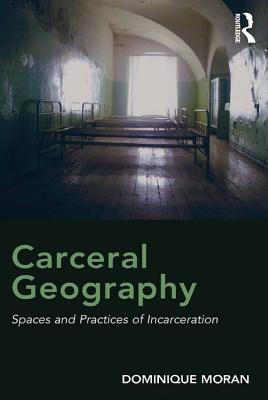
Carceral Geography: Spaces and Practices of Incarceration
Carceral Space and the Usable Past Morin Historical Geography
Professor Dominique Moran - School of Geography, Earth and
Carceral Spaces: Mobility and Agency in Imprisonment and
The 'inside' and 'outside' of prisons: Carceral geography and home
Capture and Control: Geographies of Detention and Incarceration
Carceral Geography : Spaces and Practices of Incarceration
Carceral Geography: Spaces and practices of incarceration by
Carceral Space, Prisoners and Animals - 1st Edition - Karen M
Carceral Geography : Prisons Power and Space by Dominique
Carceral Geography and the Spatialities of Prison Visiting
Prisoners and Animals: An Historical Carceral Geography
(PDF) Dominique Moran, Carceral geography: Spaces and
'DOING TIME' IN CARCERAL SPACE: TIMESPACE AND CARCERAL GEOGRAPHY
Capturing the forgotten war: carceral spaces and colonial
Sport and Incarceration - Cogitatio Press
Carceral Space, Prisoners and Animals Taylor & Francis Group
“DOING TIME” IN CARCERAL SPACE: TIMESPACE AND CARCERAL GEOGRAPHY
Young Women's Carceral Geographies: Abandonment, Trouble and
“Me Time”: (Re)Imagining the Carceral Spaces and Violent
(PDF) Carceral Geography and the Spatialities of Prison
Clearing and Cultivating Carceral Space: A historical
Carceral Spaces : Mobility and Agency in Imprisonment and
Property and carceral spaces in Christiania, Copenhagen
Carceral Space: Prisoners and Animals - Morin - 2016
Prison architecture, design and technology
Prison Architecture and Design: Perspectives from Criminology
Trans embodiment in carceral space: hypermasculinity and the
This article draws on carceral geography to understand the corporeal and spatial aspects of social work in prison settings.
Of the 3rd international conference for carceral geography at the university carcerality in the globalised present: prison spaces, forms and imaginaries.
Recent work in geography has addressed the significance of carceral space, which loosely encompasses the prison (moran 2015), as well as detention centres.
Administering agencies, geographical locations and more confound any attempt to generalise about the qualities of carceral space, sonic or otherwise.
Innovative analyses of incarceration a carceral geography from perspective include explorations of bed-space (mitchelson, 2014); space and safety (morin, 2013); spaces of flirtation (dardel, 2013); visiting spaces (moran, 2013); and personal space and the personalisation of cells (sibley and van hoven, 2009;).
Carceral space, prisoners and animals explores resonances across human and nonhuman carceral geographies. The work proposes an analysis of the carceral from a broader vantage point than has yet been done, developing a ‘trans-species carceral geography’ that includes spaces of nonhuman captivity, confinement, and enclosure alongside that of the human.
Recent conceptual debates within carceral geography about spaces of detention have largely dismissed goffman's micro‐level analysis of closed spaces and interaction.
Carceral geographies are concerned with the spaces and practices of detention and imprisonment and frequently use the carceral context as a lens through which to view concepts with wider currency within contemporary and critical human geography. Scholarship within carceral geography has tended to focus on the nature and experience of carceral.
Carceral spaces gathers original research on prison regimes and immigration detention estates from an impressive array of sites. This comparative dimension illustrates the international unevenness of spatial practices of confinement. Despite their differences, all carceral regimes create and rely on carceral spaces and carceral mobilities.
4 days ago she is author of 'carceral geography: spaces and practices of incarceration' ( 2015) and an editor of historical geographies of prisons:.
Pdf on jan 12, 2016, victor shammas published dominique moran, carceral geography: spaces and practices of incarceration find, read and cite all the research you need on researchgate.
Yvonne jewkes, university of leicester, uk ’carceral spaces are proliferating and dominique moran provides an indispensable toolkit to apprehend this development. Drawing on state of the art geographical concepts and contemporary debates she expertly defines and establishes the sub-discipline of carceral geography in this book.
Moran, d (2012) ‘doing time’ in carceral space: timespace and carceral geography. Geografiska annaler: series b, human geography 94(4): 305 – 316� google scholar.
The module will convey a sense of the debates, directions, and threads within carceral geography, tracing the origins of this sub-discipline of human geography, its synergies with criminology and prison sociology, and its likely future trajectories. The module will cover three main themes: the nature of carceral spaces and experiences within them.
Jan 18, 2017 my research focuses upon spaces and practices of incarceration, past and present.
Carceral geography offers a geographical perspective on incarceration, and this volume accordingly tracks the ideas, practices and engagements that have shaped the development of this new and vibrant subdiscipline, and scopes out future research directions.
Nov 3, 2016 brett story recommends five books on carceral geography: an approach to analyzing incarceration and policing in spatial terms, drawing from.
Geography and the state, and has highlighted spaces of incarceration as a new terrain for exploration by geographers.
Carceral geography carceral geography is a new, fast-moving and fast-developing sub-discipline. Although the first paper by a geographer published squarely in this field was probably the work of teresa dirsuweit (1999) on women’s imprisonment in south africa, the enormous potential of spaces of incarceration for geographical enquiry.
Focuses historical geographic attention on the spaces of the korean conflict. • analyses of carceral spaces vital to understanding war and violence. • ties together scholarship on carceral spaces and cold war geopolitics. • explores relationship between colonial prisons and military prisons.
Carceral geography focuses on the spaces, practices and experiences of incarceration, including prisons, migrant detention and other forms of custody.
The carceral geography working group is the research group of the rgs-ibg that brings together geographers and others interested in the spaces, practices and experiences of incarceration, broadly defined.
Carceral spaces: mobility and agency in imprisonment and migrant detention by nick gill synopsis: this book draws together the work of a new community of scholars with a growing interest in carceral geography: the geographical study of practices of imprisonment and detention.
Jennifer turner intrinsically, carceral geography enables empirical studies about the criminal justice system, about how we construct and manage law-making, the kinds of spaces we build to incarcerate people, how we punish people and for what particular crimes. Beyond that, what comes out of my work on prison as boundary is that the criminal.
Carceral geography refers to 'research into practices of incarceration, viewing such carceral spaces broadly as a type of institution whose distributional geographies, and geographies of internal.
The overall aim of this book is to help understand the legacies of carceral geographies in the present. The resonances across space and time tell a profound story of social and spatial legacies and, as such, offer important insights into the prison crisis we see in many parts of the world today.
Philo has defined “carceral geography” as a subset of security geographies, with “carceral spaces” defined as those “set aside for ‘securing’ – detaining, locking up/away – problematic populations of one kind or another. ” 8 however, this definition does not really capture the complexity of how “the carceral” figures.
This paper seeks to examine this evolution of the carceral state through the marriage of two theoretical lenses: carceral geography and foucauldian spatial power.
Dominique moran's research and teaching is in the sub-discipline of carceral geography, a geographical perspective on incarceration.
Working in these contexts, the book's contributors investigate the geographical location and spatialities of institutions, the nature of spaces of incarceration and detention and experiences inside them, governmentality and prisoner agency, cultural geographies of penal spaces, and mobility in the carceral context.
The carceral spaces and violent geographies of solitary confinement james gacek, phd candidate university of edinburgh, edinburgh law school carceral geography conference 2016 – university of birmingham.
She is author of ‘carceral geography: spaces and practices of incarceration’ (2015) and an editor of historical geographies of prisons: unlocking the usable carceral past (2015), ‘carceral spaces: mobility and agency in imprisonment and migrant detention’ (2013), and ‘carceral spatiality: dialogues between geography and criminology.
Carceral geography provides an interesting discussion of the need to scrutinise the process by which the construction of new prisons is influenced by competing philosophies of punishment, operational and administrative concerns, and architectural priorities. The role of the private sector in the tendering process is an additional consideration.
Carceral riskscape elaborates the relationship between risk and carceral space and how perceptions of risk may produce carceral practices and spaces. The approach of carceral geography is useful in understanding the complex spatialities of spaces of confinement.
Within the new and vibrant sub-discipline of ‘carceral geography’, a rich vein of work has emerged around the nature of carceral spaces and experiences inside and outside of them, which stress the importance of considering prisoner agency in the context of carceral control.
Here, then, i seek to suture together the dynamism of carceral geography with the cold war history of us warfare in order to explore the ways that ‘the nature of prison spaces and their purposes do matter, and they matter intensely’ in making the geography of the decolonizing pacific.
Situated in newark, new jersey, a city plagued by crime and incarceration, the village provides housing, retail, and maker spaces for employment and job training,.
Geography, as a disciplinary lens, brings a valuable perspective to the study of the carceral, and carceral geography's concern for the spatial could provide a new explanatory perspective to the consideration of some accepted tenets within criminology, whilst at the same time offering a productive and useful ‘grounding’ of contemporary.
(2012): 'doing time in carceral space: timespace and carceral geography', geografiska annaler: series b, human.
Jan 13, 2016 moran's carceral geography: spaces and practices of incarceration is a theoretically rich and exciting book which broadens academic.
Drawing inspiration from harvey (1982; 1985), the article makes circuits do fresh work, teasing apart the emerging carceral landscape to provide a new critical epistemology for carceral geographies. In so doing, a meta-institutional agenda for critical carceral geography is derived, and possible ways to short-circuit carceral systems are revealed.
Accessed agamben agency argue asylum seekers become biopolitical carceral geography carceral spaces cell census chapter colombian prison conceptualization confinement context counter-conducts crime criminal criminology detainees detention and deportation detention centres detention facilities e-waste electronic monitoring electronic waste.
the ’punitive turn’ has brought about new ways of thinking about geography and the state, and has highlighted spaces of incarceration as a new terrain for exploration by geographers. Carceral geography offers a geographical perspective on incarceration, and this volume accordingly tracks the ideas,.
Staff profile for dr dominique moran, reader in carceral geography, with research interests in carceral geography, a geographical perspective on incarceration.
She currently holds esrc funding for research into prison visitation and recidivism in the uk, has recently completed an interdisciplinary esrc research project looking into women’s experience of imprisonment in contemporary russia, is author of ‘carceral geography: spaces and practices of incarceration‘ and an editor of the collection.
Nov 8, 2018 jennifer turner carceral geography comes from incarceration. Geographers are typically interested in space and spatiality.
This book draws together the work of a new community of scholars with a growing interest in carceral geography. It combines work by geographers on 'mainstream' penal establishments where people are incarcerated by the prevailing legal system, with geographers' recent work on migrant detention centres, where irregular migrants and 'refused' asylum seekers are detained.
Carceral geography has yet to define the ‘carceral’, with implications for its own development, its potential synergies within and beyond geography, and effective critique of the carceral ‘turn’.
Adopting an moran d (2013) carceral geography and the spatialities of prison visiting: visitation.
Carceral circuitry: new directions in carceral geography despite the popular impression of prisons and other carceral spaces as disconnected from broader social systems, they are traversed by various circulations that reach within and beyond their boundaries.
As a result, international and domestic detention spaces like refugee camps, jails and for-profit prisons, war prisons, black sites, migrant detention islands,.
Trans embodiment in carceral space: hypermasculinity and the us prison industrial complex rae rosenberg department of geography, mcgill university, 805 sherbrooke st west, montreal, quebec, h3a 2k6, canada correspondence rdrosenb@yorku.
Aug 11, 2020 each chapter introduces an analytic lens of carceral geography — prison transport, carceral space-time, and prison architecture, to take just three.
Post Your Comments: