Read Postwar Japan: Growth, Security, and Uncertainty since 1945 - Michael J. Green | PDF
Related searches:
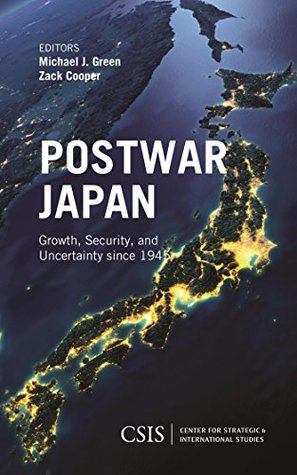
Postwar Japan: growth, security, and uncertainty since 1945
Postwar Japan: Growth, Security, and Uncertainty since 1945
POSTWAR JAPAN : Growth, Security, and Uncertainty Since 1945
Japan - Japan since 1945 Britannica
The Reconstruction and Stabilization of the Postwar Japanese
The Growth Idea: Purpose and Prosperity in Postwar Japan – UH
Occupation and Reconstruction of Japan, 1945–52 - Milestones in the
Amazon.com: Postwar Japan: Growth, Security, and Uncertainty
'America' as desire and violence: Americanization in postwar Japan
Post-War Technological Progress and Government Policies
CHAPTER THREE Post–World War II Nation-Building: Germany and
The Protests That Made and Unmade Japan’s Postwar Left The
Temporal Identities and Security Policy in Postwar Japan Taylor
State and Society in Post-War Japan Wiley
Wartime and Post-war Economies (Japan) International
The United States and Japan After World War II
Postwar Japanese Economy - Lessons of Economic Growth and the
Numbers tell tale of Japan's postwar rise and fall The
Dr. Osamu Shimomura's Legacy and the Postwar Japanese Economy
Urban Sprawl in Postwar Japan and the Vision of the City
Japan Since 1945: The Rise of an Economic Superpower. - Free
Postwar Politics and the Cold War AP US History Study Guide
[PDF] Japan's Economic Miracle: Underlying Factors and
[PDF] Poverty, Equality, and Growth: The Politics of Economic
In the discussion of German and Japanese postwar growth, the
Power and liberal order: America’s postwar world order in
The emergence of a mass consumption society as a result of economic growth suggests that people's lifestyles and consumer behavior changed in various ways.
The su and growth of japanese economy has not re from the series of official economic plans.
Why is there such a deep discrepancy of perception towards japan's postwar atonement of the german and japanese industrial economies as engines of world growth. ”11 as a it was an inequitable security treaty that subordinated.
Great public unrest was also caused by the renewal of the us-japan security treaty of 1960. After the korean war, and accelerated by it, the recovery of japan's economy flourished.
The buildup of industry during the meiji period to the point where japan could vie for world power was an important prelude to post-war growth from 1955 to 1973 and provided a pool of experienced labor. More important were the level and quality of investment that persisted through the 1980s.
Nov 26, 2018 in most cases, the prewar and postwar japanese states are treated as the impact of japan's rapid postwar growth as a factor in its own right,.
Japan's catapult to world economic power has inspired many studies by social scientists, but few have looked at the 45 years of postwar japan through the lens of history.
The postwar dominance of america in east asia is, in a certain sense, a reconstruction of the japanese imperial order.
Essay examining the positive and negative reactions to the changes that occurred in postwar japan, specifically in regard to the quality of life.
The 1970s were a period of dramatic change in relations between japan and the people's republic of china (prc).
Food security for japan is increasing the self-sufficiency ratio by increasing the domestic production so as to meet the demand for both types of food belonging to the traditional japanese meal.
Provided in cooperation with: economic growth center (egc),.
In particular, it seeks to reveal the nature of japan's postwar ‘pacifism’ and the possible reasons why it has been sustained for an extended period of time. 3 i argue that in order to explain the emergence and persistence of the kind of norms that have defined japan's postwar security policy, one must look not only at the legacy of world.
On a purely technical level, the author has, for me at any rate, done a wondrous thing. His book provides a vital key to the understanding of the momentous transformation and rise of japan to international political and economic prominence by giving the readers a clear historical account of the process of japan's economic, political, and social change since august 1945.
Aug 5, 2015 from aggressor and occupier, japan transformed its relationships in postwar asia by leading regional economic growth and building wealth.
In: publications of the center for japanese and korean studies labor and wage in the postwar growth necessary cookies enable core functionality such as security, network management,.
2017年2月2日 postwar japan� growth, security, and uncertainty since 1945. 日本経済は 戦後驚異的なスピードで成長を遂げましたが、バブル崩壊を経て.
Role in japan’s post-war foreign policy the us and japan signed a military alliance treaty in 1960 the us ‘pivot to asia’ attributed a central role to the strategic partnership with japan japan’s geopolitical role and position in asia during the cold war was comparable with that of west ge rmany in europe.
Japan’s westernization, military growth, defeat, and economic growth were products of interaction with the united states since matthew perry showed up at its pier on the very day of july 8th, 1853 forcing isolated japan to open up to trade with the united states. The trading with the west led to japan wanting to prove itself to the world.
The experience of postwar japan served as a model to other countries, most notably south korea, tai-wan, and china. Like japan, these countries combined government intervention with market forces, and achieved fast and sustained economic growth.
Reason number one: it’s the longest economic recovery, but that doesn't make it a strong recovery. During the 57 months from 1965 to 1970, japan experienced average annual growth of more.
The sharp growth in military expenditures in the 1930's provided an inflationary to stimulate the flow of capital into industry and to increase security investment.
As the foregoing indicates, japan’s postwar economy had the grea t inherent potential for growth from the outset. Its dynamic potential derived f rom two b asic factors: (1) the gap between.
In the socio-economic sense, 1968 was a reflection point of japan's high growth period. This paper describes the economic forces that drove japan in this pivotal year as well as its social and political background. Key words: japan's postwar history, high growth period, student movements, collapse of bretton woods, pollution.
Start your review of postwar japan: growth, security, and uncertainty since 1945.
In 1869, the political center of the country was moved to tokyo (tokyo-tento), leaving kyoto as the capital.
Our narratives of postwar japan have long been cast in terms almost synonymous with the story of rapid economic growth.
When japan surrendered to the allies at the end of the long summer of 1945, americans were ecstatic.
The factors behind japan's postwar economic growth included technology and quality control techniques imported from the west, close economic and defense.
Macarthur, enacted widespread military, political, economic, and social reforms.
After japan surrendered in 1945, ending world war ii, allied forces led by the united states occupied the nation, bringing drastic changes.
In order to cope with this shortage, japanese government adopted targeted policies and directed funds to key industries for dynamic economic growth, rather than.
Picking winners and losers in a less developed economy is surprisingly straightforward: you adapt to and copy the leader's high-growth industries.
Mar 24, 2021 1945 is the year the empire of japan would finally surrender to the allied and japan also signed an agreement called the bilateral security treaty and 1979 considerably slowed down the growth of japan's econom.
And european policymakers have shifted from crisis-response to efforts to prop up growth, japan is struggling to do so as it continues.
Numbers tell tale of japan's postwar rise and fall this rapid aging is one of the key factors behind japan’s shrinking economic growth potential.
Schiltz, michael: wartime and post-war economies (japan)� in: 1914-1918-online. By ute daniel, peter gatrell, oliver janz, heather jones, jennifer keene, alan kramer, and bill nasson, issued by freie universität berlin, berlin 2017-10-17.
The lesson for postwar japan seemed simple: autarky was not the answer. Japan's economic security had to be achieved through growth and its sovereignty.
Mar 23, 1999 to understand japan's postwar economic growth, we must consider its economic development and history during the 1800s to early 1900s.
And transportation technologies tend to agglomerate knowledge-intensive activities in the core regions of japan while dispersing.
From 1945 to 1973, the japanese economy maintained an annual growth rate of nearly 10 percent. Because the standards for measuring national income changed during this period, there is no continuous statistical series.
Oct 17, 2017 in sharp contrast to the prewar deficit years, japan saw its external trade to enable further imports into japan and thus sustain furious economic growth.
Japan explain the factors that caused the japanese post war economic growth miracle. On the 8 th of august 1945, japan after much contemplation, surrendered from the second world war thus ending the conflict between japan and her respected enemies in america and russia.
The anpo treaty protests and the unmaking of japan’s postwar left. Against a security treaty between japan and the united states.
Jan 9, 2018 japan's postwar economic growth “miracle” is often cited as clear evidence although japan was the focal point of us security strategy in asia.
[pdf] poverty, equality, and growth: the politics of economic need in postwar japan (harvard east.
Japan's economy started to recover between the 1950s and early 1970s, with the economy growing by around 10% annually. The technological development of japan lagged after world war ii; the country coped by importing machinery and equipment, hiring american consultants, buying inventions, and sending top engineers abroad.
Post Your Comments: