Full Download Ancient History of Vedic Culture: The Time Line of India's Vedic Civilization as Presented by the Tradition - Stephen Knapp | PDF
Related searches:
The Vedas - World History Encyclopedia - Ancient History
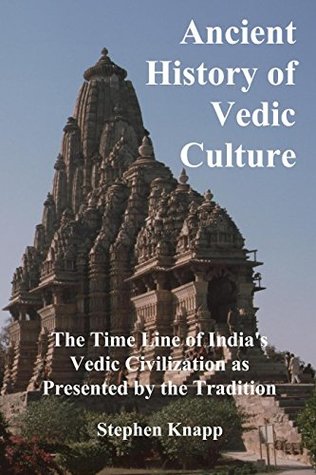
Ancient History of Vedic Culture: The Time Line of India's Vedic Civilization as Presented by the Tradition
The Vedic Period, culture and civilization- Vedic age - IndianYug
Amazon.com: Ancient History of Vedic Culture: The Time Line
History of Vedic Culture in the Middle East – Sanskriti
The Vedic Age, An Important Period In The History - IndiaVideo.org
The Vedic period (or Vedic age) (c. 1500 – c. 500 BCE) was the
The Insights of Ancient Vedic Culture of India in Rome, with Special
Vedic culture of India - The Hans India
Mysteries of the Ancient Vedic Empire - Stephen Knapp
Indo-European Vedic Culture The Great Courses Plus
The vedic culture - SlideShare
When History Gets Political: India's Grand 'Aryan' Debate and the
The Quest for the Origins of Vedic Culture: The Indo-Aryan
The Old Gods And New: Vedas, Harappan And Indus Valley
The Quest for the Origins of Vedic Culture - Vedic Illuminations
IAS Prelims Exam: Ancient History NCERT Questions: The Vedic
A STUDY OF THE EARLY VEDIC AGE IN ANCIENT INDIA - Bioinfo
Footprints of Vedic Culture in the World – Ancient Indian Wisdom
The Vedas and Ancient Egypt American Institute of Vedic Studies
The Indo-Aryan Migration and the Vedic Period World
A History of the Ancient Hindu Vedas and Vedic Period
The Vedic Period of Ancient India: Foundations
The Vedic period of Indian history Short history website
Vedic culture of the ancient Slavs: history, language, facts
The Sramana Movement World Civilization
Nov 2, 2016 as the greek writers left dated records of alexander's campaign, it helped us a great deal to frame the chronology of ancient indian history.
4 from the course: a history of india explore the ancient foundations of hinduism, which emerged from a diverse community of people who identified.
The upanishads mention iron ore and metallurgy, and in south india, as early as 1200 bc to 1100bc, huge developments were made in iron ore related.
A few centuries after the decline of the harappan civilisation, a new culture flourished in the same region and gradually.
Vedic religion, the religion of the ancient indo-european-speaking peoples who entered india about 1500 bce from the region of present-day iran. It takes its name from the collections of sacred texts known as the vedas. Vedism is the oldest stratum of religious activity in india for which there.
Dec 30, 2018 new research using ancient dna is rewriting prehistory in india - and shows of them leading names in disciplines as diverse as genetics, history, it would mean acknowledging that aryans or their vedic culture were.
This is the next major civilization that occurred in ancient india after the decline of the indus valley.
In the previous lesson, you read about the harappan civilization.
Ancient indian history - vedic society - occupation of individuals was the basis of classification of a society in the rig vedic period.
Abstract- the vedic period (or vedic age) was a period in history during which the vedas, the oldest scriptures of hinduism, were composed.
Mar 31, 2020 vedic civilization is the most important civilization of ancient india. There are many speculations about its origin in the subcontinent.
Jun 14, 2016 the various ancient indian civilisations form a major part of the ancient indian history syllabus for the upsc ias exam.
The vedic civilization is the earliest civilization in the history of ancient india. It is named after the vedas, the early literature of the hindu people. The vedic civilization flourished along the river saraswati, in a region that now consists of the modern indian states of haryana and punjab.
The first stage is known as the rigvedic period or early vedic period and the later stage is known as the later vedic period.
After that bunches of indo-aryan people groups moved into north-western.
The ancient history of vedic ancestors the indo-aryan migration debate has been going on ever since european scholars claimed (in later part of 19 century) that the practitioners of the vedic rituals and the authors of rgveda were “aryans” of european ancestry.
Vedic religion, also called vedism, the religion of the ancient indo-european-speaking peoples who entered india about 1500 bce from the region of present-day iran. It takes its name from the collections of sacred texts known as the vedas. Vedism is the oldest stratum of religious activity in india for which there exist written materials.
Mcq on vedic period questions and answers gk quiz – vedic age culture, economy, religious faith, rituals, heritage general knowledge here, we have provided direct links for downloading the mcq on vedic period model question papers exclusively at free of cost in ancient indian history section.
This is how ancient vedic culture viewed the partnership of husband and wife. 85), the marriage hymn, states that the daughter-in-law should be treated as a queen, sāmrajni, by all the family members especially the mother-in-law, husband, father-in-law. Woman is designated as: aditi, because she is not dependent (nirukta, 4/22).
We also know that the vedic thought and culture reflected in the rig veda has a continuous history of dominance in india during the last thirty-five hundred years. It is likely that the cultural traditions of the vedic peoples mingled with the traditions and customs of the indus people.
The history of hinduism is extremely debated owing to some concrete reasons. The concept of hinduism never existed before the modern times, hindu traditions and rituals were however being performed since time immemorial. Hindu religion is also known as vedic religion and its relevance is eternal.
Vedic mathematics is another example of its contribution to world progress. It is an ancient development that continues to play an important part in modern society. Without the advancements in math that had been established by vedic culture as far back as 2500 bc and passed along to others, such as the greeks and romans, we would not have many of the developments and inventions that we enjoy.
Vedic period of indian history basically the culture and tradition of a country depends on its historical background. Ancient vedic culture still continues in some aspects in india because the indians are the successor of the vedic inhabitants. The culture was divided in two distinct groups; dravidians and aryans.
Vedic culture of the ancient slavs arose long before the baptism of russia. It is believed that it developed in the system of pagan perception of the world, which became the basis of the communal-clan system. This is a complex cultural process consisting of beliefs, rituals, iconography, costumes, musical and song creation. All this was the basis of the spiritual heritage of the slavs, which.
Nov 18, 2016 a brief history about ancient vedic civilization.
Ancient europe had vedic influences and several photographic evidences were found, which indicate hinduism, especially vaishnavism being followed by rulers and society of italy and greece.
Jan 1, 2020 with many historical consonants, geographically parallel, trade, religion, philosophy, socio — cultural influence exemplify the strong bond.
Pdf this book gives latest research updates on ancient hinduism. It surveys the pre-vedic religion of ancient india as found in the indus valley or find, read.
Feb 7, 2018 the vedic period is one of the most important phases in the history of early vedic period (1500-1000 bc), is also known as rig vedic period.
Ancient history of vedic culture: the time line of india's vedic civilization as presented by the tradition ebook: knapp, stephen: amazon.
As a type of spiritual/priestly culture, vedic civilization resembles more that of earlier egypt or babylonia than that of greece. The greeks, though speaking a language with affinities with vedic sanskrit, represented a later ancient culture already moving away from the spiritual and hieratic civilizations of the early ancient world.
Dec 30, 2016 it is recognized that some forms of vedic culture prevailed in western asia. The name of the city itself is of indian origin, as bagh in sanskrit.
The saint narada muni, one of the great authorities of vedic culture, makes this same point in srimad-bhagavatam. The failing of modern hinduism is that its followers disregard this scriptural injunction. In vedic culture there is a natural respect for the “higher” classes, especially the brahmanas.
Early aryan, or vedic, culture was the early hinduism whose interaction with non-aryan cultures resulted in what we call classical hinduism. Ancient india facts according to greek philosophers slavery did not exist in ancient india.
The vedas represent a monumental spiritual literature, by far the largest that remains from the ancient world, the profound symbolic mantras of india’s ancient rishis. We could therefore call the vedas, ‘the pyramids of the ancient mind’.
The vedic period began when the aryans started their civilization in these areas, flourished and later traveled across the world. In india, the vedic period was also known to be a flourishing time for the sanskrit literature and indian culture.
Of the arts and crafts of the vedic period, some seem to have arisen undoubtedly before the aryans came and settled down in the punjab.
Vedic culture is divided into two groups and four vedas – aryans, dravidians, and brahmana, kshatriya, vaishya, shudra respectively. In the vedic period, agriculture and pastoralism were economic factors.
Since time immemorial proponents of the vedic culture used to breed exceptional horses in this region. Thus eventually the land itself began to be called arva (horses) –sthan(place).
The vedic culture of india has its own history, the tradition of which takes it back to the beginning of time. This book is not a typical review of the history of india, but explains what the pre-historic traditional vedic background is, its basis, and how it developed and expanded through time.
The vedic religion was the historical predecessor of modern hinduism. The vedic period refers to the time period from approximately 1750-500 bce, during which indo-aryans settled into northern india, bringing with them specific religious traditions. Most history of this period is derived from the vedas, the oldest scriptures in the hindu religion.
Vedic culture originates in the spiritual world and in prehistory it was spread practically all over this planet (and others). Later these locations were gradually cut off and developed, or rather degraded, independently. Thus in the present world there are many differences on the basis religion.
It is an ancient development that continues to play an important part in modern society. Without the advancements in math that had been established by vedic culture as far back as 2500 bc and passed along to others, such as the greeks and romans, we would not have many of the developments and inventions that we enjoy today.
The vedic age is the “heroic age” of ancient indian civilization. It is also the formative period when the basic foundations of indian civilization were laid down. These include the emergence of early hinduism as the foundational religion of india, and the social/religious phenomenon known as caste.
The spread of the vedic culture into the region of west asia can be seen with the kassites in 1750 bce in mesopotamia, where they worshiped surya. Other vedic groups were undoubtedly in the intermediate region of iran, which consisted of several ethnic groups including the elamite and the turkic.
3 origins of vedic civilization consider in the next chapter, that vedic civilization was either a precursor to the indus-saraswati civilization or an early contributor to its cultural and spiritual heritage. Vedic civilization arose in india many millennia before the speculative mythologies of the past suggest.
500 bce) was the period in indian history during which the vedas, the oldest scriptures of hinduism, were composed.
The vedic period refers to the time in history from approximately 1750-500 bce, during which indo-aryans settled into northern india, bringing with them specific religious traditions. Most history of this period is derived from the vedas, the oldest scriptures in the hindu religion, which were composed by the aryans in sanskrit.
Information about the early vedic period is the puranas (traditional mythic- historical works).
The vedic culture is indigenous to india it can be scientifically proven that the vedic culture is indigenous, through archaeology, the study of cultural continuity, by linguistic analysis, and genetic research. For example, the language and symbolism found on the harappan seals are very vedic.
The vedic literature had been evolved in the course of many centuries and was handed down from generation to generation by the word of mouth. The vedas are the collection of hymns, prayers, charms, litanies, and sacrificial formulae.
Vedic culture is divided into two groups and four vedas – aryans, dravidians, and brahmana, kshatriya, vaishya, shudra.
Ancient india the history of india begins with the indus valley civilization and the coming of the aryans. These two phases are generally described as the pre-vedic and vedic periods. The earliest literary source that sheds light on india's past is the rig veda.
It has a series of essays by experts who analyse recent material from the fields of genetics, linguistics and archaeology to determine our origins.
256; ↑ naval viyogi:nagas, the ancient rulers of india, their origin and history,p.
Vedic ageancient history of vedic culturethe aryansthe quest for the origins of vedic culture.
Ancient history of india's vedic culture vedic culture has its own history, the tradition of which takes it back to the beginning of time. This book is not a typical review of the history of india, but explains what the pre-historic traditional vedic background is, its basis, and how it developed and expanded through time.
The vedic period or the vedic age refers to that time period when the vedic sanskrit texts were composed in india. The society that emerged during that time is known as the vedic period, or the vedic age, civilization. The vedic civilization flourished between the 1500 bc and 500 bc on the indo-gangetic plains of the indian subcontinent.
Food in vedic period begins with cereals like rice and barley which formed a major part of food in vedic period. The vedic literature throws considerable light on the food and drink habits of the people of the ancient india. Among the food grains, the rig veda repeatedly mentions barley, particularly fried barley.
Post Your Comments: