Read The Soil Solution, the Nutrient Medium for Plant Growth - Frank K. Cameron file in ePub
Related searches:
The Soil Solution: The Nutrient Medium for Plant Growth
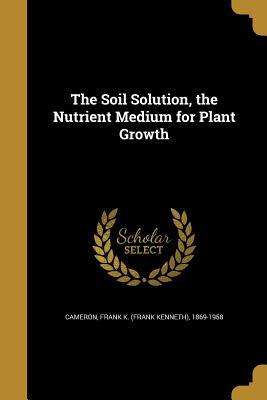
The Soil Solution, the Nutrient Medium for Plant Growth
The soil solution, the nutrient medium for plant growth
Details - The soil solution, the nutrient medium for plant
The soil solution, the nutrient medium for plant growth, - CORE
The soil solution, the nutrient medium for plant growth by
Picking the Best Growing Medium for Your Hydroponic System
[Optimization of the nutrient medium for the biosynthesis of
The Soil-Plate Method for Isolation of Fungi from Soil Nature
TISSUE ANALYSIS AS A MEASURE OF NUTRIENT AVAILABILITY FOR THE
The Use of Agar Nutrient Solution to Simulate Lack of Convection in
Design and Preparation of Nutrient Solution Used for Soilless
The Soil as a Plant Nutrient Medium SpringerLink
THE SOIL AS A PLANT NUTRIENT MEDIUM
Soil pH and the Availability of Plant Nutrients Nutrient Stewardship
The culture medium (nutrient medium) can be referred to as a highly
Understanding the Numbers on Your Soil Test Report - UAEX
Hydrogel-based transparent soils for root phenotyping in vivo PNAS
Growing Plants In Nutrient Solution - The Ohio State University
The Soil as a Plant Nutrient Medium Request PDF
How to regulate the pH balance of your cannabis growing medium
Does Hydroponic Or Soil Growing Produce The Best Cannabis
Potassium for crop production UMN Extension
The Difference Between Nutrient Solubility and Mobility
Comparative study on the uptake of strontium-85 from nutrient
Review—The Real-Time Revolution for In situ Soil Nutrient
Soil Nutrients - The Permaculture Research Institute
NUTRIENT SOLUTIONS FOR GREENHOUSE CROPS - Eurofins
Growing Mediums for Hydroponic Systems
Culture Medium and the Preparation of Stock Solution Plant
Nutrient Medium Article about Nutrient Medium by The Free
Pond soil, the nutrient medium of your pond Velda
Soil Testing for Effective Nutrient Management
Soil Solutions - The Nature Conservancy
Effect of Boron on the Behavior of Nutrients in Soil-Plant
Use of nutrient medium technique for vegetation restoration
The effect of a hydroponic nutrient solution vs. a soil-like
Plant nutrients in the soil
Soil Preparation - How do you prepare soil for planting?
Growing Azolla The Azolla Foundation
Nutrient medium - definition of Nutrient medium by The Free
Use of Liquid Nutrient Broth Media for Growing Bacteria
CRITERION WL Differential Medium and WL Nutrient Medium for
Correcting soil acidity by the use of lime is the foundation of a good soil fertility program. It also: supplies essential plant nutrients, ca and mg, if dolomitic lime is used. Prevents elements such as mn and al from being toxic to plant growth.
Ph varies according to the substrate and is easier to monitor in soil (buffering capacity) than in hydroponics (a growing medium that is more unstable than soil and in which minerals interact in a much faster way).
It adds some nutrients but, more importantly, it loosens clay soils and makes it more workable. Spread about 3 to 4 pounds of gypsum per 100 square feet over garden soil after it has been dug in the winter. Add sand and organic matter to clay soil to make it more workable.
Soil aspects: lal and rao (1954) reported that b serves to regulate the accumulation of ions even from nutrient solutions. Similarly, santra et al� (1989) reported that b not only functions within the plant but also in the nutrient medium, thereby affecting the intake of nutrients.
The nutrient medium matrix can absorb and store the rainfall, and then release slowly, and to provide nutrients for early growth of saplings, which is an impor - tant part of nutrient medium technique. However, the optimum mix ratio, water retention, water absorption and nutrient retention of the nutrient medium matrix need to be studied.
The hoagland solution provides every essential nutrient required by green plants and is appropriate for supporting growth of a large variety of plant species. The solution described by hoagland in 1933 has been modified several times, mainly to add ferric edtas and alter the number and concentrations of micronutrients.
Any value above 7 means the h+ ion concentration is lower than at a neutral ph and the solution is alkaline and there are more hydroxyl (oh-) ions present than.
Which yield can be related to varying tissue concentrations of that element.
The hoagland solution, for example, is a balanced nutrient solution for plant cultivation in hydroponics, while soil solutions can vary greatly in their composition depending on soil type.
Dishes should be about ¾ full -- about 15 ml in a 60x15 mm dish and 40 ml in 100 mm dish. This ensures an adequate nutrient and water supply through to the young sporophyte stage.
Nutrient agar is a basic culture medium commonly used for the culture of non-fastidious microorganisms, and for quality control and checking purity prior to biochemical or serological testing. Nutrient media can also be used for the cultivation of fastidious microorganism by enriching the medium with serum or blood.
The nutrients in the soil solution with a positive charge are adsorbed onto a silica 24, 6–24, and 6 mg silicon kg−1 soil were interpreted as high, medium.
The solution is innovative farming at your own home “hydroponics”. What is hydroponics? hydroponics is an emerging sustainable soil-less gardening. It basically involves raising healthy plants without the use of a traditional soil culture by using a mineral-rich water hydroponic nutrient solution instead.
May 28, 2019 the medium consists of interconnected pores that are surrounded by nutrient solution, held into spherical beads of hydrogel.
Sep 7, 2016 the intermediate nutrients are required by plants in medium in the soil, nutrients in soil solution can be easily washed down beyond the root.
This problem is exacerbated under sodic or saline‐sodic soil conditions as a consequence of k + ‐na + antagonism. Here k + uptake by plants is severely affected by the presence of na + in the nutrient medium.
The relation between strontium-85 uptake by young lettuce plants and soil solution composition is discussed. Uptake from soils is furthermore compared to the uptake from nutrient solutions. A close relationship is shown to exist between the concentration of sr in the plant and the sr/ca ratio in the solution, either in the nutrient medium or in the soil solution.
A well-drained sandy loam could be used as a growing medium� but a supply of very uniform soil in the volume required may be difficult to find.
The objective of this research was to determine the nitrification rate response in a perlite trickling biofilter (root growth medium) exposed to hydroponic nutrient.
Soil water is the medium from which all plant nutrients are assimilated by plants. Soil water, sometimes referred to as the soil solution, contains dissolved organic and inorganic substances and transports dissolved nutrients, such as nitrogen, phosphorus, potassium, and calcium, to the plant roots for absorption. The amount of water in the soil is dependent upon two factors:.
Nutrient agar, being a complex media, is the ideal medium for growing and cultivating bacteria.
Köp the soil solution, the nutrient medium for plant growth av frank k cameron på bokus.
Medium: the nutrient concentration in the soil may or may not be adequate for optimum growth of most crops. Plant growth and yield may be limited by the availability of this nutrient. There is a low to moderate probability of a favorable economic response to additions of the nutrient.
“hydroponics” is the growing of plants in a liquid nutrient solution with or without the use of artificial media. Commonly used mediums include expanded clay, coir, perlite, vermiculite, brick shards, polystyrene packing peanuts and wood fiber.
Soilless culture systems are classified according to the type of substrate (soilless medium) they use, how the nutrient solution is delivered to the plants (drip.
In hydroponics, the growing medium takes the place of the dirt/soil. Not to provide nutrients, but so the roots can support the plants weight and hold it upright. Just about any inert material can be used as a growing media. Inert meaning that it cant/wont decay or break down quickly, thus providing nutrients to the plants.
5) is optimal for plants to make the best use of the available nutrients, so test the ph of the solution regularly. To prevent the nutrients from becoming too concentrated, add water to keep the level of the solution steady and change the solution regularly to keep it fresh.
The invention pertains to culturing ascoscarps or fruitbodies of species of the genus morchella. Mycelia are provided with nutrients and subsequently produce nutrient-primed mycelia, such as nutrient-rich sclerotia or nutrient-rich hyphae, in which are stored sufficient nutrients to supply the ascocarps that develop later.
Nutrient medium is designed to enable explants to grow in a totally artificial environment. Medium formulas vary based on explants used and the purpose of the culture. Table 1 is a comparison of several media that are commonly used in plant tissue culture. Plant growth factors of different combinations may be added to the basic formulas.
Here, the nutrient medium is added to the petri plates before adding the bacterial sample. The nutrient medium added to the sterile petri plates is then allowed to solidify. After solidifying the nutrient medium, add 1 ml of the bacterial suspension over the medium’s surface.
Although garden soil seems ordinary, it's actually a complex mixture of organic materials, minerals, and other nutrients. 1 it keeps plants upright, channels water and air to their roots, and feeds their growth. The qualities that make for good garden soil fall into two categories: fertility and texture.
Wl nutrient medium, also known as wallerstein laboratory medium, was developed by green and gray while studying various fermentation processes. (4,5) wl differential medium and wl nutrient medium are used simultaneously as a set of three plates. One plate is prepared from wl nutrient medium and two plates from wl differential medium.
Hydroponic systems include all systems that deliver the nutrients in a liquid form, with or without an aggregate medium to anchor the plant roots.
Growing plants with their roots in an artificial medium instead of soil is becoming a popular ant whether plants are grown in soil or nutrient solutions.
Low: the nutrient concentration in the soil is inadequate for optimum growth of most crops and will very likely limit plant growth and yield. There is a high probability of a favorable economic response to additions of the nutrient. Medium: the nutrient concentration in the soil may or may not be adequate for optimum growth of most crops.
Consumption of both these gases by soil microflora and plant roots. This paper evaluates the potential of stagnant nutrient solution containing 0n1% agar.
In a soil medium, manure can be added, which is a nutrient-rich material. This is something that a hydroponic solution can’t replicate. Soil is filled with microbes that help turn organic material like guano and worm castings into usable nutrients for your plant.
Om provides nutrients as it decomposes, buffers the ph of the soil solution (see below) against rapid chemical changes, and improves soils’ cation exchange capacity (see below). Good horticultural soil: most soils are dominated by mineral particles; some are dominated by organic matter. Some soils have a high percentage by volume of pore space, while others have little pore space.
The composition of the nutrient medium used to grow cells determines the rate of production, the type of products produced, and the yield of biomass and products. The medium also influences the cost of production, the quality of the product, and factors such as the broth rheology.
Feb 3, 2021 lettuce started in soilless growing medium and then planted into hydroponic system. With classic hydroponics, the nutrient solution must be very.
The composition of many nutrient solutions is such that soluble salts of iron cannot remain in solution for more than a brief period of time.
Nutrients in soil plants absorb nutrients dissolved in soil solution. Our focus is often on the total amount or ‘quantity’ of nutrients present in soil, but the ability of a soil to supply nutrients is determined by the release those nutrients into the soil solution, ‘intensity’.
The application of pond soil in the pond will provide a proper nutrient medium for the planting in the pond. Owing to the high concentration of nutrients an explosion of algal growth will occur.
Nutrient medium synonyms, nutrient medium pronunciation, nutrient medium translation, english dictionary definition of nutrient medium. A liquid or gelatinous substance containing nutrients in which microorganisms, cells, or tissues are cultivated for scientific purposes.
Nutrient broth bacterial growth medium nutrient broth is typically made of a powdered beef extract that contains peptones (broken down proteins). The powder is dissolved in water, put in test tubes, and sterilized.
Water culture systems do not use a medium to support the roots, only the nutrient solution. Medium culture systems use a solid substrate, such as sand, to support the plant root structure. In an open system, the nutrient solution flows past the roots, and the solution is not recycled.
Solution which has come to be known all over the world as hoag-land's culture solution. The composition of this solution was origi-nally patterned after the displaced soil solution obtained from certain soils of high productivity. However, the fact that hoagland made extensive use of the nutrient solution which bears his name should.
Click here to get an answer to your question ✍️ the culture medium (nutrient medium) can be referred to as a highly enriched laboratory soil.
Soil improvement methods, which can be very useful, are not included.
Soil serves as a medium for plant growth; a sink for heat, water, and chemicals; of plant residues in the wheel-trafficked interrows may be a practical solution.
Mar 13, 2020 nutrient solution is water mixed with nutrients to promote healthy growth. When choosing a medium, you'll want to keep three acronyms in mind:.
Nutrient medium there are relatively few reports (bourn 1932) of successful attempts to grow higher aquatic plants in synthetic nutrient media. Because this was essential for the estab- lishment of critical nitrogen and phos- phorus levels, modifications of one of the hoagland solutions ( hoagland and snyder.
The soil solution: the nutrient medium for plant growth by frank kenneth cameron.
At this stage of bacteriological diagnosis, a culture of mycobacterium grown inside the liquid nutrient medium in the form of diffused clouds cannot be differentiated into species by cultural-morphological features, and reseeding on a dense nutrient medium of lowenstein-jensen lengthens study periods up to 20 days, just like the direct seeding.
Nutrient solution may be added by hand, by means of a gravity feed system, or mechanically. In a small setup, the nutrient solution can be mixed in small containers and added by hand as needed. In a large setup, the gravity-feed system can be used effectively.
What is a nutrient solution? why is it more convenient to use liquid medium, as opposed to soil, to grow plants in nutritional studies? in nutrient solutions, nitrogen can be supplied as nh4+ or no3–.
Soil on the roots may cause them to rot, and may also cause trouble by getting into the nutrient solution. Preparing the nutrient solution for proper growth, plants must be supplied with nitrogen, phosphorus, potassium, calcium, magnesium, sulfur, iron, manganese, boron, zinc, copper, molybdenum, and chlorine.
+to be suitable as a medium for plant growth, soils are expected to provide plant to increase the supply of nutrient ions present in solution at the root surface.
Soil testing labs use these solutions to extract plantavailable nutrients from the soil levels near a “medium” range.
Soil is the stomach of the earth - consuming, digesting, and cycling nutrients and living organisms present in soil include archaea, bacteria, actinomycetes,.
When preparing the nutrient solution, we recommend that you add all the nutrients to the water and then carry out the ph measurement. Below you will find the standard recommended ph values for the growing and the flowering period in soil: with certain organic fertilizers, it is possible to avoid ph fluctuations.
By means of mathematical planning of the experiment optimal concentrations of components of the nutrient medium were found for the biosynthesis of phytotoxic metabolites by the soil fungus myrothecium verrucaria vkmf-183. The composition of the optimized medium were: glucose--8%, kh2po4--0.
In contrast, the addition of polyethylene glycol 400 to the nutrient medium resulted in a reduction of osmotic potential in the root xylem sap; this os-motic adjustment in the xylem was large enough to establish anosmotic gradient for entry of water and cause guttation at a nutrient solution osmotic potential.
Therefore, turning the soil to mix applied phosphorus fertilizer into the soil profile is a highly desirable procedure. A surface soil (6 to 8 inches in depth) testing “high” in phosphorus may test “medium” or “low” following deep tillage to a depth of 8 to 12 inches, the result of bringing into.
This latter eflect may be accom-- plished by allowing the nutrient solution to high in the nutrient medium during the early period of plant growth, thus furnishing an an increased or enhanced mineral content over that of soil-grow.
Growth of terrestrial plants without soil in mineral nutrient solutions was called solution culture. It quickly became a standard research and teaching technique and is still widely used. Solution culture is now considered a type of hydroponics where there is an inert medium.
” the nutrient concentration in the soil is inadequate for optimum growth of most crops and is a high probability of a favorable economic response to additions of the nutrient. Medium: the nutrient concentration in the soil may or may not be adequate for optimum growth of most crops.
A soil plate is prepared by transferring a small amount of the soil to be examined into a sterilized petri dish. Of cooled medium is added and the soil particles dispersed throughout.
When 6-8% agar is dissolved in the liquid nutrient medium, it makes a solid medium. A partially solidified medium is known as semisolid medium where the amount of agar added is reduced. A medium without agar remains in liquid form and is known as liquid medium.
In soil, roots need to spread out to survive, but not in hydroponics. Hydroponic systems deliver nutrients straight to the roots, letting the plant focus on growing.
Feb 17, 2020 reuse of the work in any medium, provided the original work is properly cited. This paper electrochemical sensors for soil nutrient determination function by using in addition to aqueous solutions, moist soils.
Tiny seeds germinate in a soil-less growing medium before being transferred to a water-based solution that provides all the nutrients hydroponic lettuce needs to reach harvest size.
Tissue culture involves the use of small pieces of plant tissue (explants) which are cultured in a nutrient medium under sterile conditions. Using the appropriate growing conditions for each explant type, plants can be induced to rapidly produce new shoots, and, with the addition of suitable hormones new roots.
Perhaps it was but to may attain a value manyfold that of the nutrient medium.
The soil solution, the nutrient medium for plant growth, - core.
The soil water contains the soluble products of the soil, and is the main nutrient medium for the plant roots. There is evidence that plants may also feed directly on nutrients contained in the soil colloids.
The rest of the nutrient in the growing medium is present in solid form. Solubility is important because roots can only take up nutrients that are dissolved in solution.
Use the amounts of nutrient solutions listed in the chart medium acid strongly acid. Table 2: effects of soil reaction on availability to plants of soil nutrients (after.
Growing plants in a nutrient solution in absence of soil is called hydroponics.
Cover crops and manure can be used to feed soil microbes and recycle soil nutrients. As soil microbes decompose organic residues, they slowly release nutrients back into the soil for the winter cover crops or for the preceding crop.
In hydroponic gardening, pineapple plants are placed in a solution of water and nutrients directly available to the roots. The growing medium shortens the time pineapples conventionally require to root in soil and locate water in order to survive.
Our native plants evolved in this system, and are well adapted to maine soils. Such as buildings, roads and bridges; and; it is a medium for plant growth. Om provides nutrients as it decomposes, buffers the ph of the soil solution.
Cultivation of soil microorganisms: microbes growing on a nutrient medium are referred to as a culture.
Nutrient medium: a substance, either solid or liquid, used for the cultivation, isolation, identification, or storage of microorganisms.
Post Your Comments: